About Hortiboletus rubellus (Krombh.) Simonini, Vizzini & Gelardi
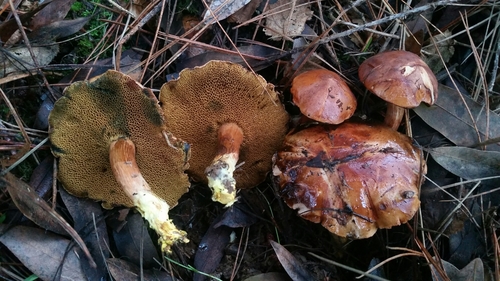
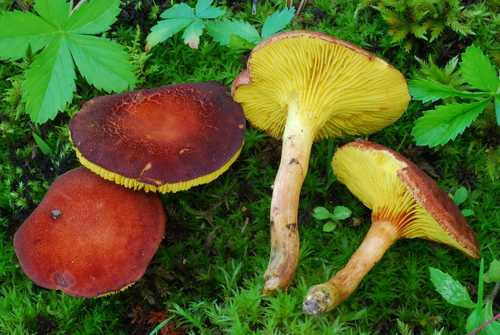
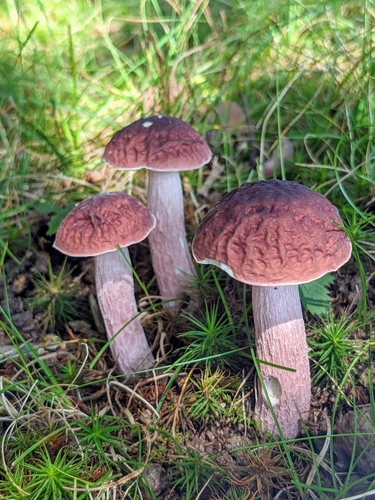
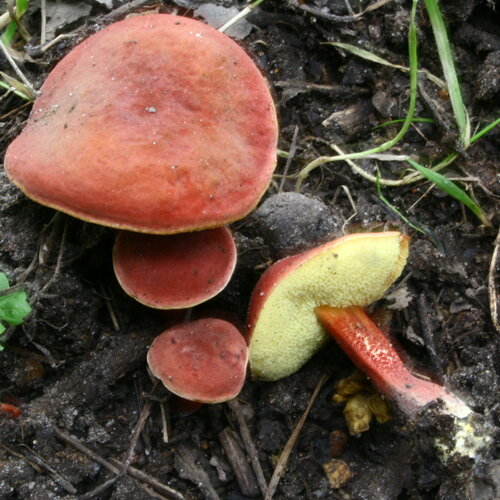
This species is a small bolete. Its cap rarely grows more than 6 centimetres (2+3⁄8 in) in diameter. When young, the cap is scarlet to raspberry red, with a dry, velvety texture, and it often cracks as it ages. A pale yellow or white band typically lines the extreme margin of the cap, and the whole cap darkens and becomes duller with age. The pores are small, pale yellow, and bruise slowly. The stem is slender, long, sometimes tapering, and can reach 7.5 cm (3 in) in length. It is lemon yellow at the apex, red across the rest of the surface, and has a tendency to split or shear vertically. The flesh of the cap is straw-coloured, and stains slowly blue over the tubes when cut. The stem flesh is pale yellow at the apex and yellow further down, and may have a distinct brick-red or orange spot at the base of the stem. Tubes and pores are large and lemon-yellow, and may develop a greenish tinge as they age. The spore print is olive. The odour is pleasant but indistinct, and the species is reported to have a slightly soapy taste. Conflicting reports of pore size in prominent publications suggest that multiple species may be grouped under this name, in both Britain and North America. It is uncommon to rare in Southern England, where it grows largely in association with oak (Quercus). It also occurs across Europe, Eastern United States, and Canada. A similar species noted as "cf versicolor" has been collected from Victoria in southeastern Australia.