About Hordeum vulgare L.
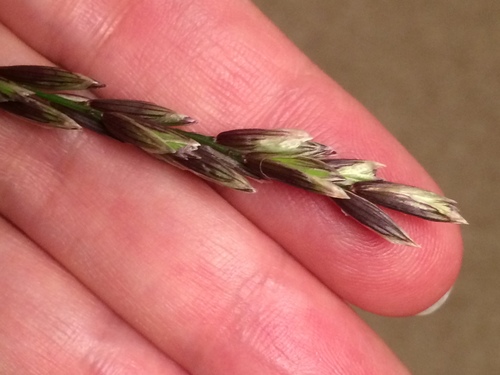
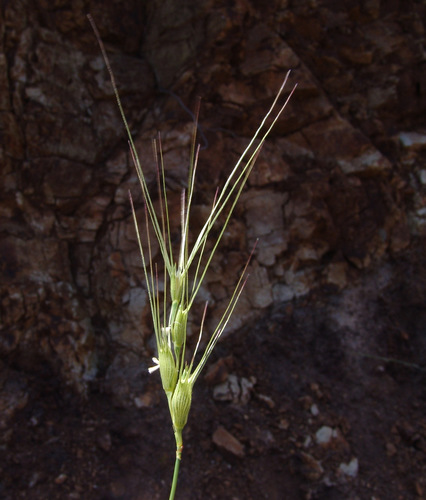
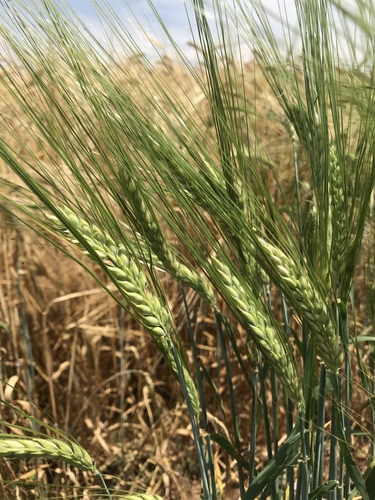
Barley, scientifically known as Hordeum vulgare L., is an edible-grain cereal belonging to the grass family. Its inflorescences are made of spikelet clusters arranged in a characteristic herringbone pattern. Each individual spikelet bears a long thin awn that can reach up to 160 mm (6.3 in) long, giving the grain heads a tufted appearance. Spikelets grow in groups of three; in six-row barley, all three spikelets in each cluster are fertile, while in two-row barley only the central spikelet is fertile. This species is self-pollinating, diploid, and carries 14 chromosomes. The barley genome was fully sequenced in 2012 by the International Barley Genome Sequencing Consortium and the UK Barley Sequencing Consortium. The genome is arranged into seven pairs of nuclear chromosomes, with the recommended designations 1H, 2H, 3H, 4H, 5H, 6H and 7H, plus one mitochondrial chromosome and one chloroplast chromosome, for a total size of 5000 Mbp. Full genome sequence data is freely accessible through multiple public barley databases. As a cultivated crop, barley grows best at relatively cool growing season temperatures between 15 to 20 °C (59 to 68 °F), and is grown across temperate regions worldwide. It thrives in full sun and well-drained soil. In the tropics and subtropics, it is cultivated for food and straw in South Asia, North and East Africa, and the Andes of South America. Barley requires irrigation when grown in dry regions. It has a short growing season and is relatively drought-tolerant. It is more tolerant of soil salinity than other cereals, with tolerance levels varying between different cultivars. It has lower winter hardiness than winter wheat, and far lower winter hardiness than rye. Like other cereals, barley is typically planted on tilled farmland. Traditional planting involved scattering seed by hand, while modern cultivation in developed countries usually uses seed drilling. As the crop grows, it needs soil nutrients including nitrogen, phosphorus, and potassium, most often supplied as commercial fertilizers. Fields must be monitored for pests and diseases, with treatment applied when needed before issues become severe. When barley is ripe, its stems and ears turn yellow, and the ears start to droop. Traditional harvesting was done by hand using sickles or scythes; in developed countries, modern harvesting is fully mechanized with combine harvesters. One common non-food use of barley straw involves placing it in mesh bags and floating the bags in fish ponds or water gardens to reduce algal growth, and this method does not harm existing pond plants or animals. Reports of this technique’s effectiveness are mixed at best. Historically, barley grains were used as a unit of measurement in England, where a nominal inch was defined as three or four barleycorns. This traditional measurement was replaced by standardized inch definitions by the 19th century. In ancient Mesopotamia, barley was used as a form of currency, and the standard unit of weight for barley (which also became the standard unit of value) was the shekel. In medieval times, barley water was used as a medical remedy, and this use is documented by Avicenna.