About Hordeum spontaneum K.Koch
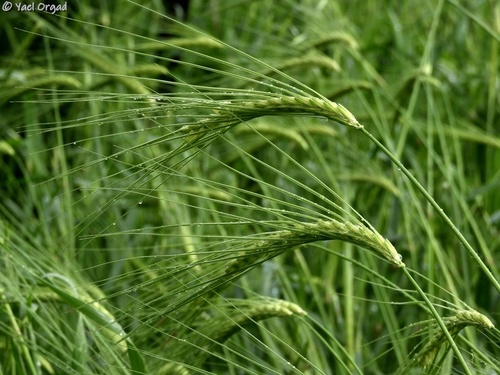
Hordeum spontaneum K.Koch, commonly known as wild barley, is an annual grass. It is very similar in overall form to cultivated barley (Hordeum vulgare), but differs in having slightly narrower leaves, longer stems, longer awns, a brittle rachis, a longer more slender seed spike, and smaller grains. Wild barley has traits that improve its survival and seed dispersal: its brittle rachis, the central part of the seed head, breaks apart when grain is ripe, and its hulled seeds are arranged in two rows. By contrast, cultivated barley has a more durable rachis, and seeds are usually arranged in either two or six rows. Cultivated barley usage varies by region: in eastern regions, barley is most often grown for human consumption, and the naked grain form is preferred, while in western regions, the hulled grain form is mainly grown, used for animal feed and to produce malt for brewing. Wild barley is native to North Africa, the Middle East, parts of the Indian subcontinent, and south-west China. Its confirmed native range includes Libya, Egypt, Israel, Lebanon, Jordan, Syria, Crete, Cyprus, Turkey, Iran, Iraq, Afghanistan, Armenia, Azerbaijan, Kyrgyzstan, Turkmenistan, Uzbekistan, Pakistan, India, and the Sichuan and Xizang provinces of China. Wild barley grows across a very wide range of locations, from deserts to Mediterranean-type habitats and highland habitats, and occurs in both cultivated and uncultivated fields. It is exposed to many environmental stresses including high temperatures, drought, and high soil salinity, and local populations have developed adaptations to the specific microclimates where they grow. This wild species is considered a potentially useful genetic resource for breeding stress-tolerant varieties of cultivated barley.