About Hoplodrina ambigua (Denis & Schiffermüller), 1775
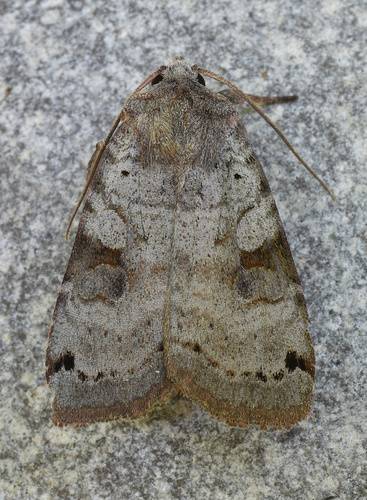
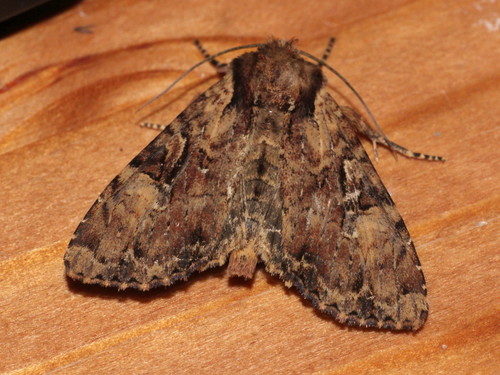
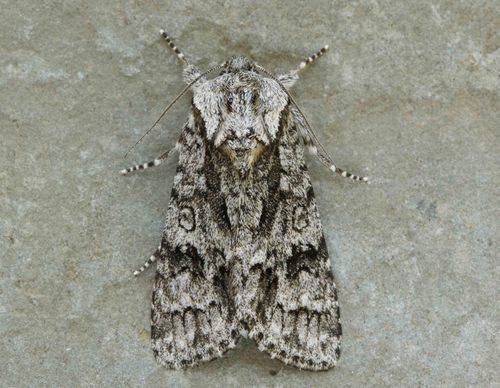
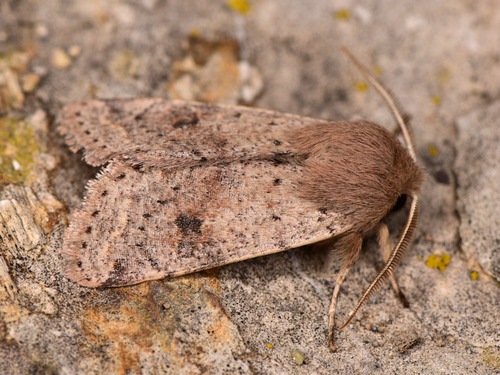
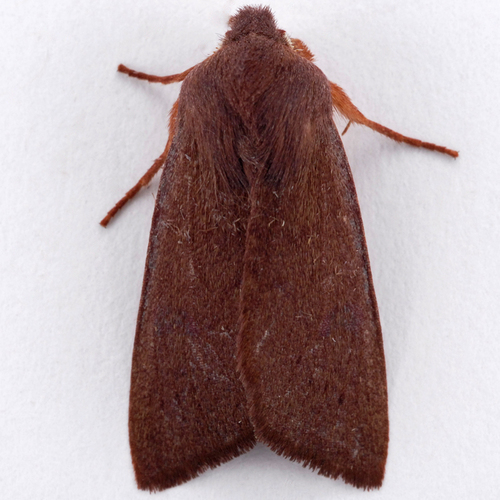
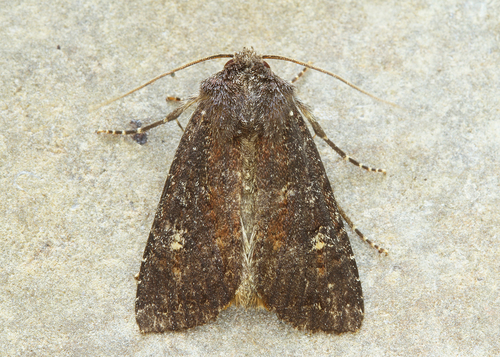
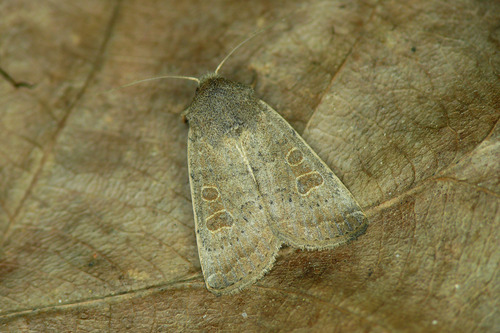
Hoplodrina ambigua (Denis & Schiffermüller), 1775 has a wingspan of 32–34 mm, and forewings measuring 13–15 mm in length. The forewings are greyish ochreous, and sometimes are uniformly tinted brownish overall. Lines and stigmata on the forewings are dark grey, with stigmata marked by pale annuli. The submarginal line is luteous, and is preceded by a dark grey shade. Hindwings are dirty pale grey in males and darker in females; both sexes have darker hindwings in forms with brown suffused coloration. Several distinct forms and variants are documented. The form sericea Speyer, found in Holland and Germany, is described as having narrower, silky grey forewings. The taxon previously treated as a form of this species, now recognized as the full species Hoplodrina levis Stgr. from West Turkestan and Asia Minor, has a predominant yellower ochreous tint and conspicuous dark markings. The variant ab. ochrea ab. nov. [Warren], from pale specimens collected in Segovia, Spain, has dark markings that tend to become less distinct, with the head, thorax, and forewings all pale yellow ochreous. The form amurensis Stgr. describes small, dark specimens from Ussuri, Amurland. This species is similar in appearance to Hoplodrina octogenaria and Hoplodrina blanda, and is often confused with them. Certain identification requires dissection of the genitalia. Additional information can be found in Townsend et al.