About Homalanthus populifolius Graham
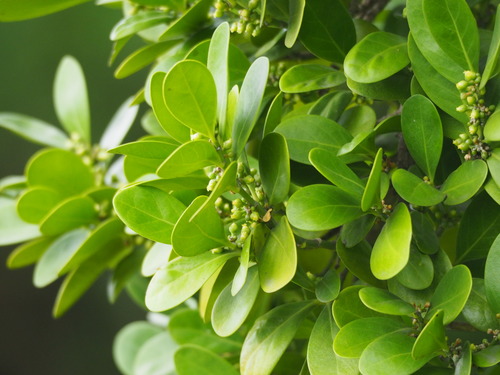
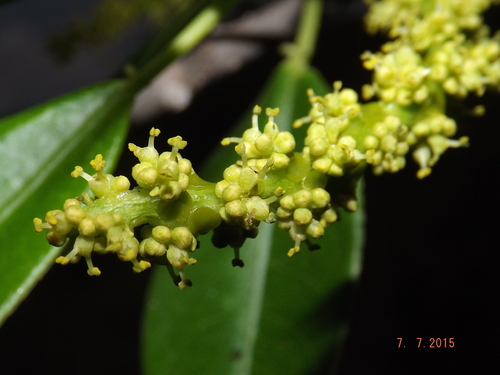
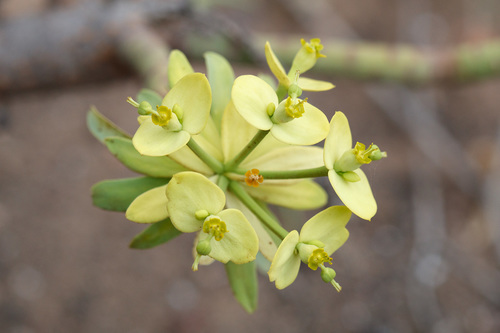
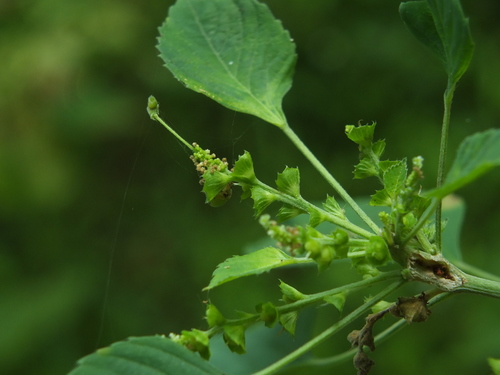
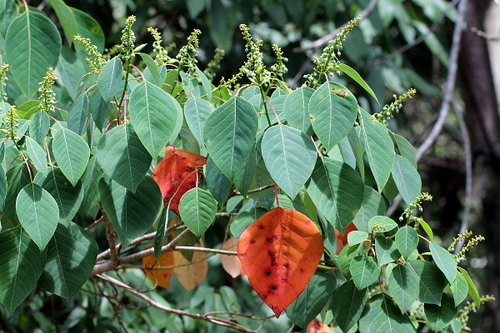
Homalanthus populifolius Graham is a small tree or shrub that can grow up to 8 meters tall with a trunk diameter of up to 15 cm. Its trunk is cylindrical, covered in fairly smooth greyish-brown bark that features some bumps and irregularities. Branchlets are thick, and range in color from reddish to green. Its leaves are triangular, untoothed, and arranged alternately; they measure 5 to 15 cm in length, and resemble poplar leaves, which is how the species gained the epithet populifolius. The leaves turn red when they reach senescence, which gives this plant its common name of bleeding heart. The plant’s flowers, which range from yellow-green to red, are 2 to 10 cm long, and grow in racemes; flowering occurs mostly from September to December. The fruit, which matures between December and March, is a two-lobed capsule that bears an oily yellow aril. Seeds germinate quickly when exposed to the warmth of direct sunlight. Like many pioneer species, bleeding heart seeds have a long dormancy period. A variety of birds eat this plant’s fruit, including the brown cuckoo dove, silvereye, and Lewin's honeyeater. The plant’s small size and decorative red leaves make it an attractive garden plant. However, its traits as a pioneer species also allow it to become a successful invader in disturbed areas. It is classified as an invasive species in southern Africa, Hawaii, and New Zealand. The Sa'dan Toraja people crush its leaves together with mud to produce a black dye used for funeral clothing.