About Holoptelea integrifolia (Roxb.) Planch.
Holoptelea integrifolia, commonly called the Indian elm, is a large deciduous tree. It typically grows 20 to 25 meters tall, and rarely reaches over 30 meters in height. It has a broad crown with several ascending branches. Its bark is grey, covered in blisters, and peels into corky scales on mature old trees.
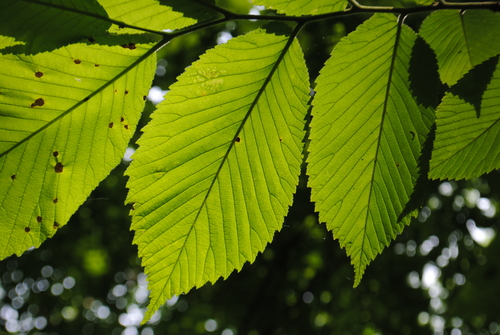
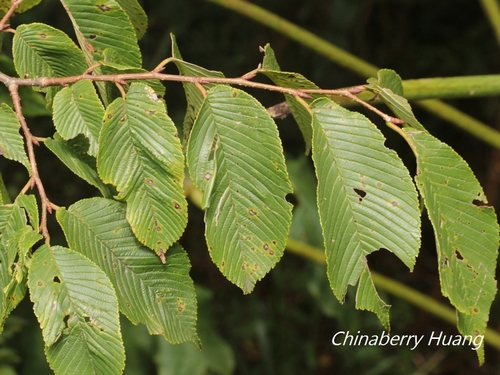
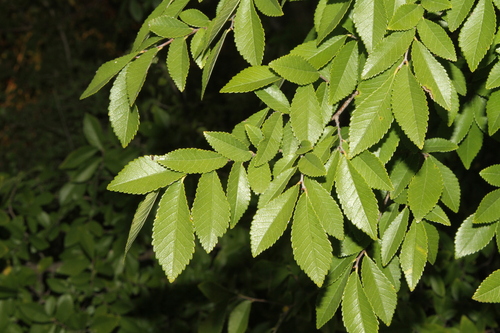
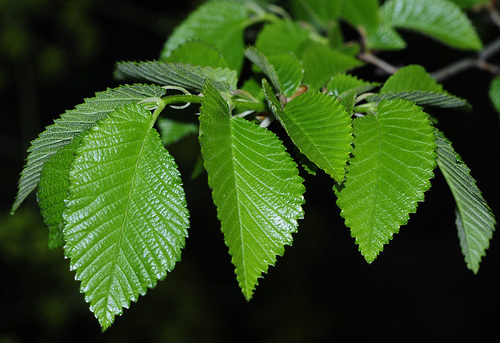
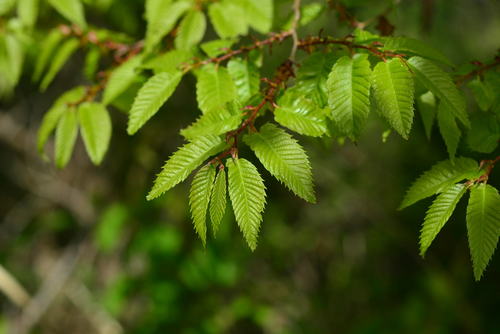
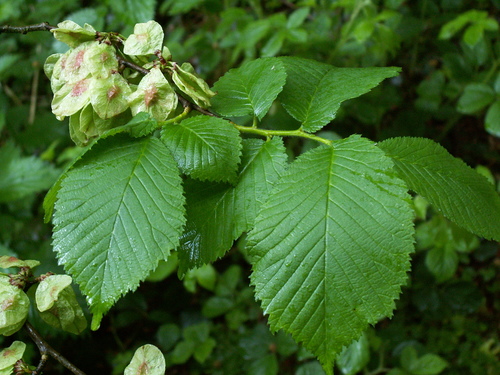
Leaves are alternately arranged, and have an elliptic-ovate shape. They measure 8 to 13 cm long and 3 to 6.5 cm wide, are smooth, have entire margins that are occasionally toothed, and end in a pointed tip. The leaf base is rounded or heart-shaped, and its stipules are lance-shaped. Crushed leaves produce an unpleasant odor.
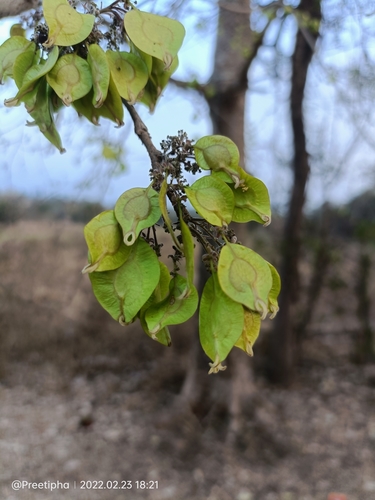
Its flowers are small, range in color from greenish-yellow to brownish, and are covered in fine soft hairs. Flowers grow in short racemes or fascicles at the scars left by fallen leaves. There are typically 4 sepals, which are velvety to the touch. The fruit is a circular samara 2.5 cm in diameter, with membranous net-veined wings surrounding a flat central seed.
Holoptelea integrifolia produces timber used to make inexpensive furniture, and is also harvested as firewood for use in rural areas. It is also grown in ecological forestry because it tolerates heat and drought, and has good regenerative abilities. Its flowers, leaves, and bark are used in medicine to treat several diseases.