About Holocentrus rufus (Walbaum, 1792)
Body Coloration
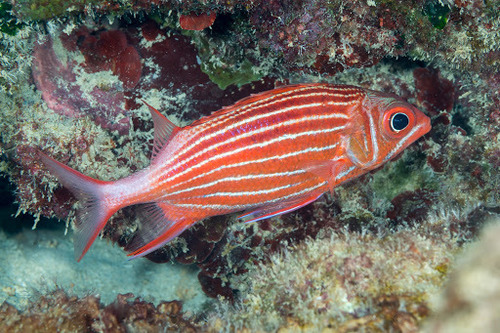
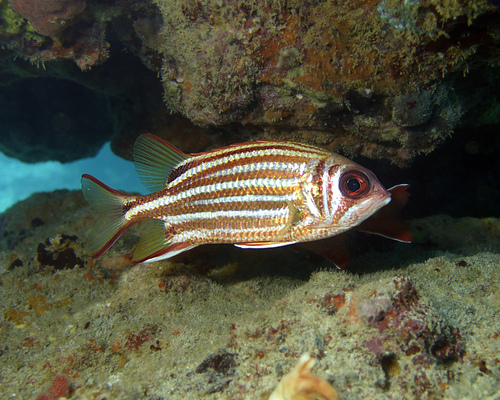
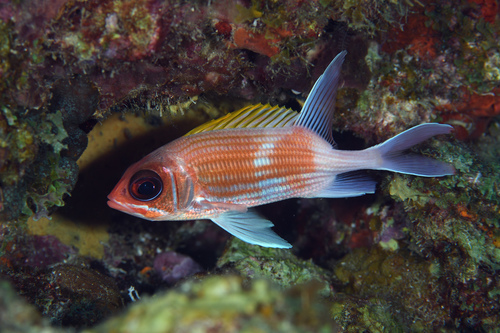
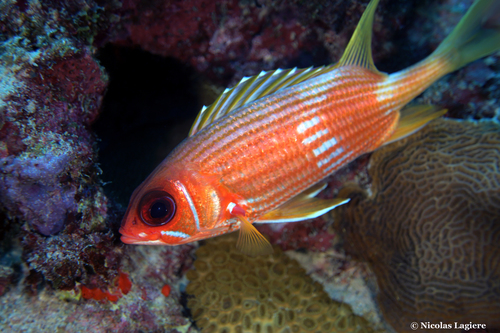
Identification: The longspine squirrelfish (Holocentrus rufus) has a silvery red body marked with orange-gold stripes.
Eye Size
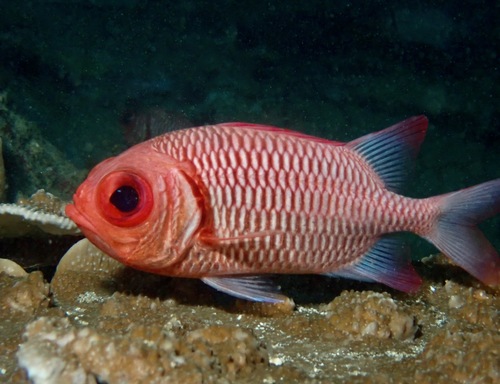
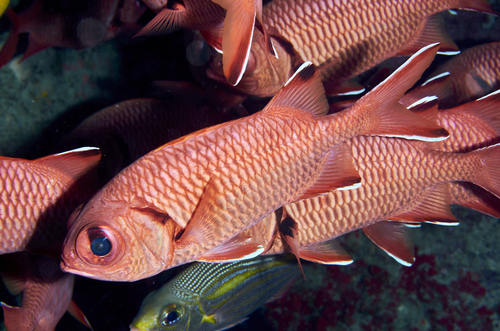
Like all squirrelfish, it has very large eyes.
Fin Features
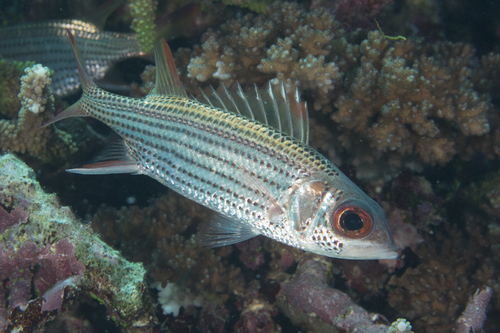
Its rear dorsal fin is prominent and erect, and its anal fin has a strongly elongated third spine — this feature gives the species its common name.
Squirrelfish Taxonomy and Traits
Squirrelfish are a group of around 150 species belonging to the order Beryciformes; they are brightly colored, medium-sized nocturnal fish that inhabit rocky or coral reefs in tropical and warm-temperate seas, with large eyes being their most defining characteristic.
Identification Tips
To identify longspine squirrelfish, alongside the long third anal fin spine, close examination of the anatomy of other fins can also be helpful.
Habitat
Distribution: Longspine squirrelfish are marine fish that live in coral reefs.
Maximum Length
They reach a maximum length of 18 cm (7.8 inches).
Geographic Range
Their range extends along the southeastern coast of the United States through Bermuda and the West Indies to northern South America and Brazil.
Territorial Behavior
They hide in or near dark recesses, are territorial, and defend their crevices using both visual and acoustic displays.
Depth Distribution
They are rare on shallow reefs, become more abundant as depth increases, and are most common between 30 and 70 meters.
Juvenile Characteristics
Juveniles are thin, silvery pelagic fish and are seldom encountered.
Diet Composition
Food: The bulk of the longspine squirrelfish's diet consists of zoobenthos, including crustaceans, mollusks, and gastropods.
Feeding Period
This species typically guards its territory during the day and feeds more actively at night.