About Histiopteris incisa (Thunb.) J.Sm.
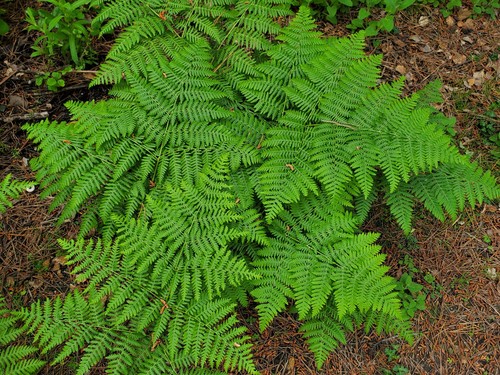
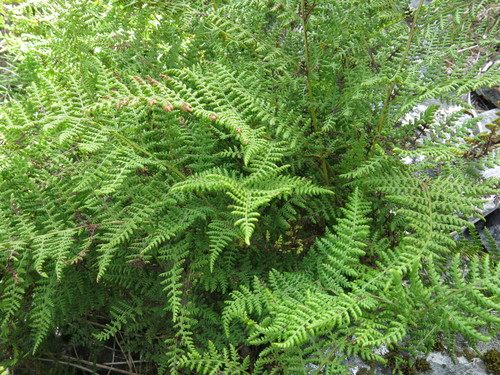
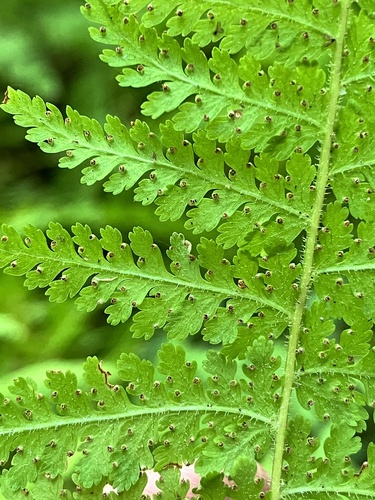
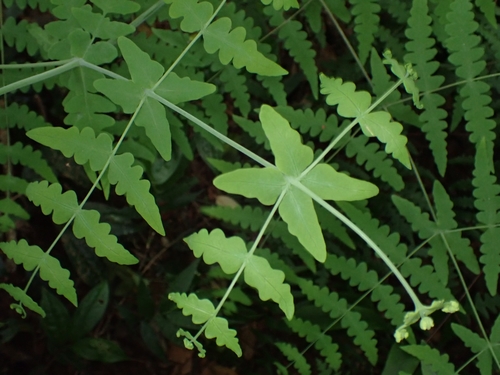
Histiopteris incisa, commonly called bat's wing fern, is a medium-sized fern. Its fronds are typically 60–200 cm long, widely spaced, distinct, and slightly dimorphic: fertile lobes are slightly narrower than infertile lobes. Fertile lobes bear continuous, linear, exindusiate sori (sori without an indusium) that are protected by reflexed leaf margins. Young fronds have thick, whitish blue-green succulent stipes, while mature fronds are thin and long, with red-brown stipes. Pinnae are pale greyish-green, almost glaucous, paired and opposite, set at a wide angle, and very deeply lobed. The two lowermost lobes on each pinna create a bat-wing shape that gives the species its common name. This fern has a robust creeping rhizome 5-10mm wide, covered in brown or reddish scales. Bat's wing fern is widely distributed and abundant across most of the southern hemisphere, including Tasmania. It is less common in exposed highland areas, and mostly absent from low rainfall regions. This is a weedy opportunistic species that freely colonizes disturbed sites on the margins of or within wet forest, and often forms extensive colonies. It mainly grows in high rainfall forests with poorly drained soils. It is found mostly in shaded areas, as shade is required for pinnae survival, though it can grow in less shaded locations if sufficient water is available. It commonly grows on wet forest margins, along open scrubby creeks and gullies, and at the base of cliffs. In rare cases with optimal growing conditions, its fronds can reach 7 meters in length. This species is available from many Tasmanian nurseries, and is popular as both an indoor and outdoor ornamental plant, because it needs little sunlight and is very aesthetically pleasing. It is a popular pot plant, grows easily in both pots and open ground, and spreads quickly in cool, moist environments.