About Hippotion velox Fabricius, 1793
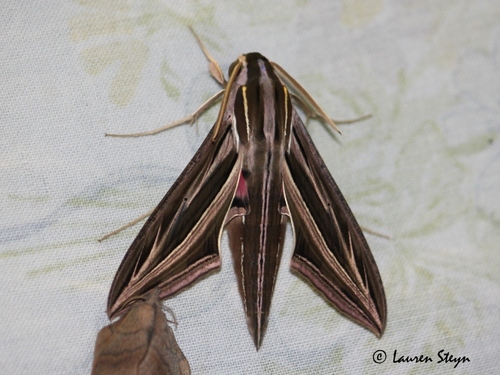
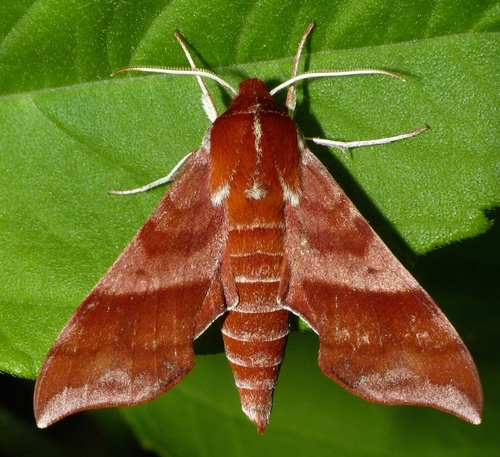
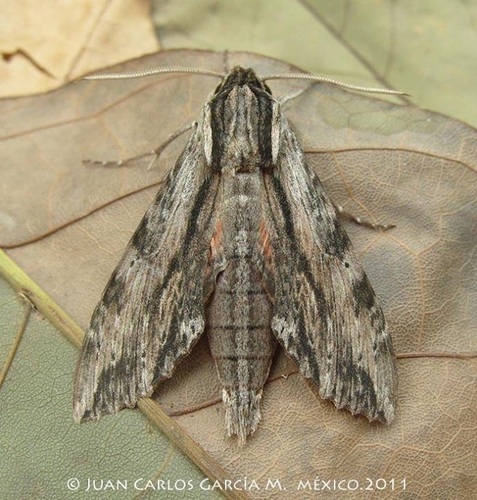
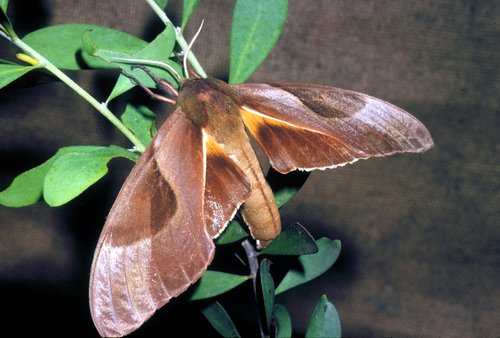
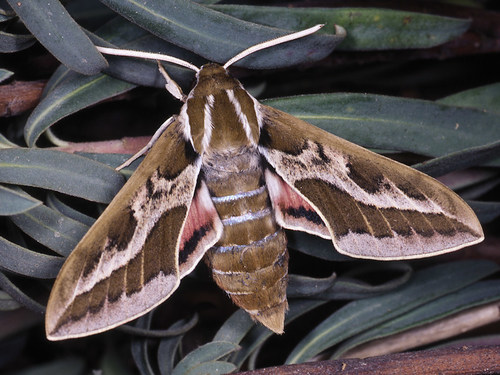
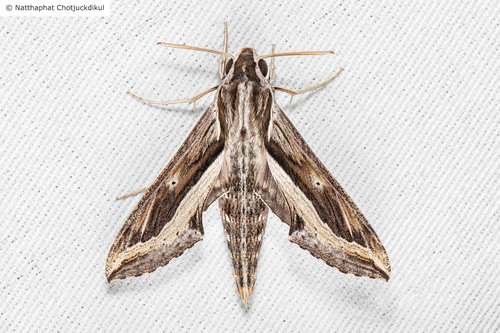
Hippotion velox, first described by Fabricius in 1793, has a wingspan ranging from 54 to 76 mm. Its head and thorax are brown, marked with pale lateral streaks. The abdomen is brown, covered in numerous dark strigae, and each abdominal segment has pairs of pale lateral strigae. Its forewings are brown and lack any silvery markings, which distinguishes this species from T. celerio. The hindwings are smoky brown, with faint traces of a darker submarginal line. The final instar larva of this moth occurs in two distinct forms: green and dark. Full-grown larvae may be pale green or brown, with black dorsal dots. An eyespot is present on the 4th somite; in the green larval form, this eyespot has a blue center surrounded by yellow, while the brown larval form has an ochreous black ring around the eyespot. A subdorsal line runs from the 5th to the 11th somite. The horn of the larva is purplish in the green form. The pupa is bone colored, and is densely covered with brown spots and speckles, along with some scattered black dots. Recorded host plants for Hippotion velox larvae belong to the families Araceae, Convolvulaceae, Nyctaginaceae, and Rubiaceae, including species from the genera Ipomoea, Boerhavia, and Morinda. This species is distributed across the entire Indo-Australian tropics, ranging from India and Sri Lanka eastward to Fiji and New Caledonia, and northward to Hong Kong, Taiwan, Sumatra, southern Japan. It is also found in northern Australia, from Western Australia east to Queensland.