About Hippomane mancinella L.
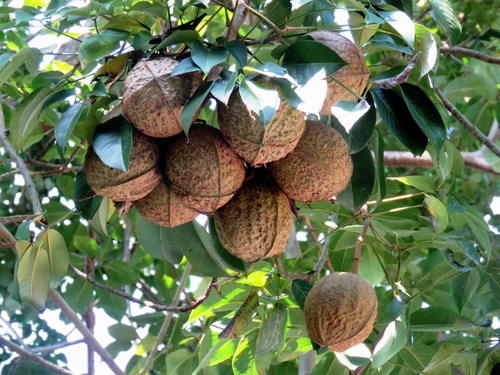
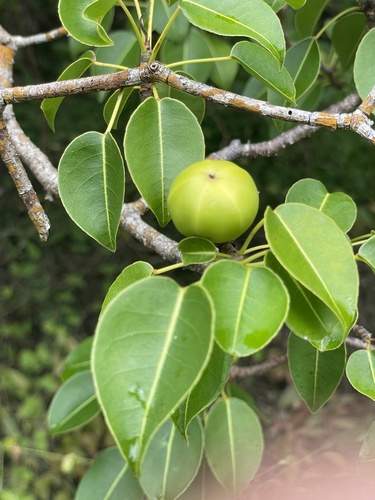
Hippomane mancinella L., commonly known as manchineel, is a tree that can reach up to 15 metres (49 feet) in height. It has reddish-gray bark, small greenish-yellow flowers, and shiny green leaves. The leaves are simple, arranged alternately, have very fine serrations or teeth along the edges, and measure 5–10 centimetres (2–4 inches) long. After spikes of small greenish flowers develop, the tree produces fruits that look similar to apples, which are green or greenish-yellow when ripe. Every part of this tree, including its fruit, is poisonous. Manchineel is native to the Caribbean, the U.S. state of Florida, the Bahamas, Mexico, Central America, and northern South America. It typically grows on coastal beaches and in brackish swamps, alongside mangroves. It acts as an excellent natural windbreak, and its roots stabilize sand to reduce beach erosion. All parts of the manchineel tree contain strong toxins. Compounds responsible for its toxicity include 12-deoxy-5-hydroxyphorbol-6-gamma-7-alpha-oxide, furocoumarins, sapogenines, hippomanins, mancinellin, and other phorbol esters. The tree's milky white sap causes severe allergic contact dermatitis. Even standing under the tree during rain can lead to skin blistering from contact with sap mixed into raindrops, and a single small drop of this mixture is enough to cause blistering. If smoke from burning the tree reaches the eyes, it can cause ocular injury. Contact with the milky sap (latex) causes bullous dermatitis, acute keratoconjunctivitis, and potentially large corneal epithelial defects. While eating the fruit can be potentially fatal, no fatal cases have been reported in modern literature. Ingesting the fruit causes severe gastroenteritis with bleeding, shock, bacterial superinfection, and potential airway compromise caused by edema. People who have eaten the fruit report it tastes pleasantly sweet at first, followed by a strange peppery sensation that gradually progresses to a burning, tearing feeling and tightness in the throat. Symptoms worsen over time, leaving patients unable to barely swallow solid food due to extreme pain and the sensation of a large lump obstructing the pharynx. In many parts of the manchineel's range, trees are marked to warn of danger: for example on Curaçao, trees carry warning signs or a red X painted on the trunk, while in the French Antilles a red band is often painted roughly 1 metre (3 ft) above the ground on tree trunks. While the plant is toxic to most birds and other animals, the black-spined iguana (Ctenosaura similis) is known to eat the manchineel's fruit and even live among the tree's limbs. Historically, the Arawak and Taíno peoples used a poultice of arrowroot (Maranta arundinacea) as an antidote for manchineel poisoning. The Carib people poisoned their enemies' water supplies with manchineel leaves, and poisoned arrow tips with manchineel sap; Spanish explorer Juan Ponce de León died shortly after being struck by a poison-tipped arrow in battle with the Calusa in Florida. Despite the dangers of handling this tree, Caribbean furniture makers have used its wood for centuries. To make it safe for use, the tree must be cut and left in the sun to dry out the sap. To avoid dangerous contact with toxic parts, people sometimes fell the tree by burning its base.