About Hexatricha pulverulenta (Westwood, 1843)
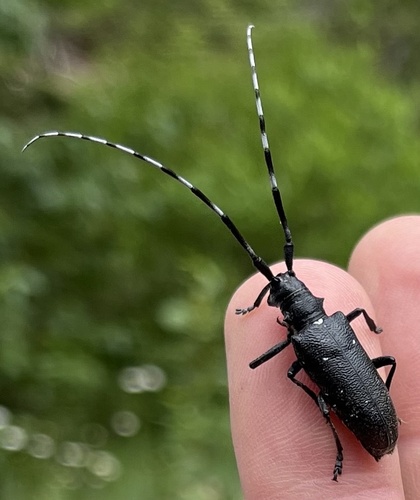
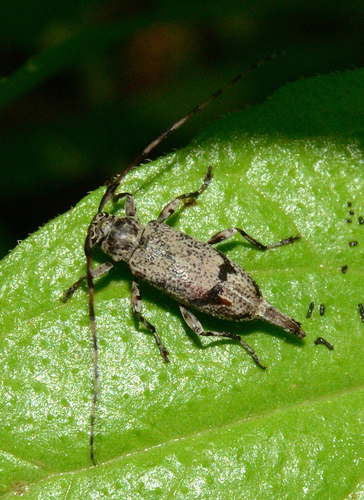
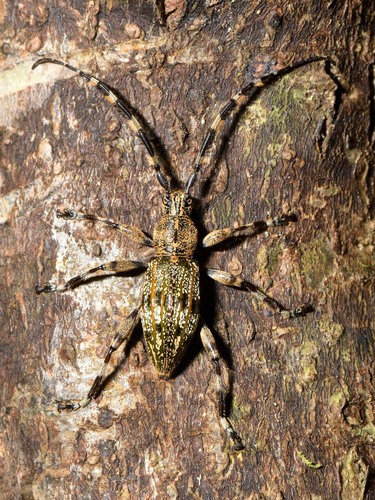
Hexatricha pulverulenta, commonly known as the squeaking longhorn, is a species of beetle belonging to the family Cerambycidae. It is the only species in the monotypic genus Hexatricha, and is endemic to New Zealand. It was first described by John O. Westwood in 1843 under the original name Lamia pulverulenta, and was later moved to the genus Hexatricha, which is sometimes incorrectly spelled Hexathrica. The common name squeaking longhorn refers to the stridulation noise the beetle produces when it is handled. Female squeaking longhorn beetles lay eggs under the bark of dead or dying trees, most often Pinus radiata or New Zealand beech (Nothofagus). Eggs hatch 10 to 19 days after being laid. Larvae live under the tree bark and feed on wood for approximately two to three years, then pupate for 30 days. After pupation, adult beetles emerge between spring and autumn, which falls between August and April in New Zealand. Adult beetles live for up to three months, and are reluctant to fly.