About Heterotheca subaxillaris (Lam.) Britton & Rusby
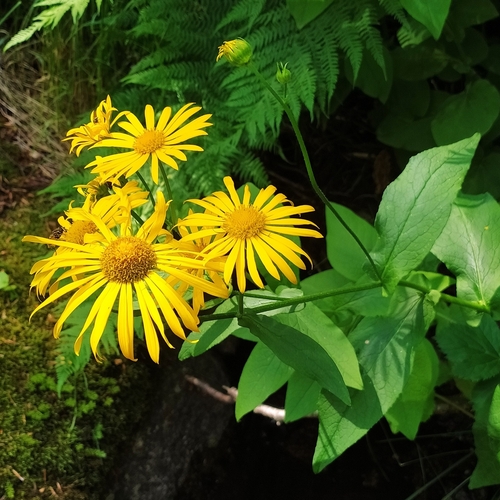
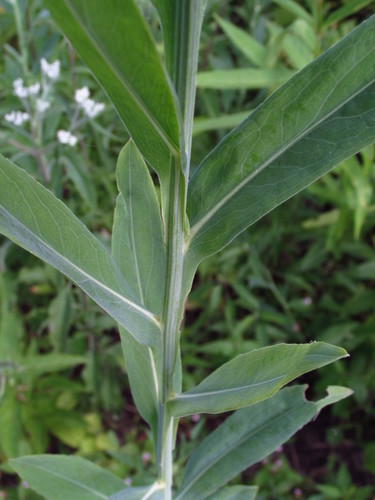
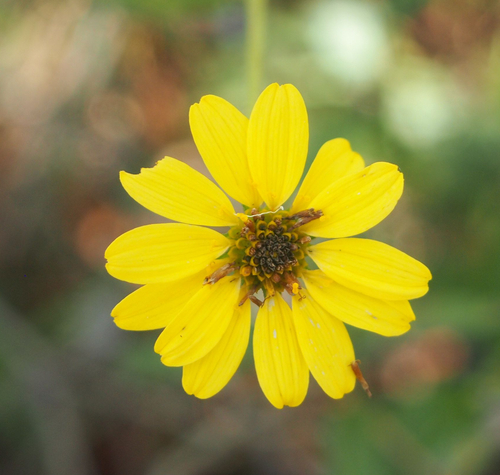
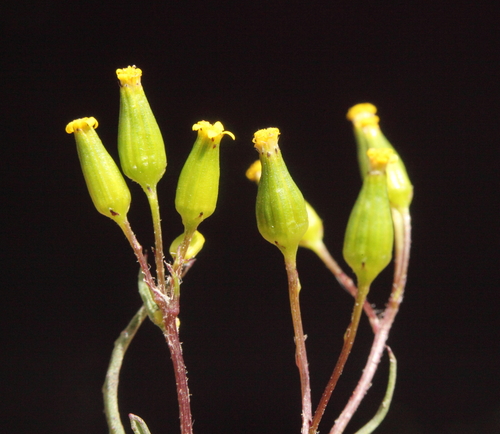
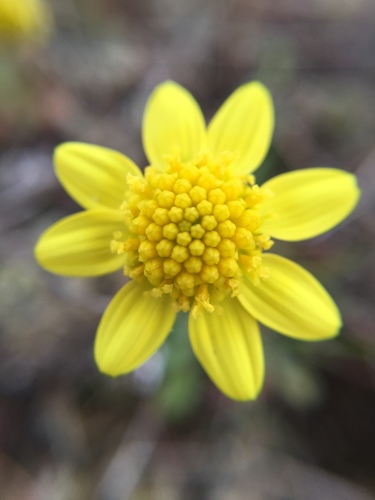
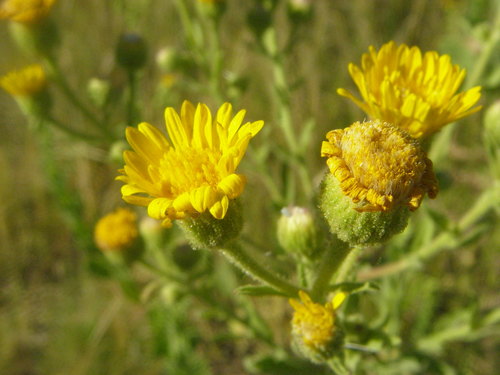
Heterotheca subaxillaris, commonly called camphorweed, is a perennial aromatic herb that can reach up to 203 centimeters (80 inches, or 6 2/3 feet) tall. It often produces several erect stems, which range from hairy to bristly in texture. Its inflorescence holds between 3 and 180 flower heads arranged in a flat-topped cluster. Each flower head contains 15 to 35 yellow ray florets, which surround 25 to 60 disc florets at the center of the head. This species is widespread across much of the United States, ranging from California to Massachusetts, and is also found in Mexico and Belize. It grows in a variety of habitats including upper beaches, longleaf pine-wiregrass savannas, and pine-scrub oak sand ridges. It is most commonly found in sandy areas, and thrives in prairies with high sand content. It also prefers human-disturbed areas such as roadsides or waste ground. The florets of camphorweed are adapted to accommodate generalist pollinators equally or more effectively than specialist pollinators like plasterer bees. Other bees are the most frequent generalist visitors: they collect nectar and pollen from the plant, and in exchange transfer male gametes between individual flowers. Larvae of insects including brown flower moths and agromyzid flies feed on the stems and/or flower heads of camphorweed.