About Heteropogon contortus (L.) P.Beauv. ex Roem. & Schult.
Heteropogon contortus (L.) P.Beauv. ex Roem. & Schult. is a tropical perennial tussock grass. Its native range covers Southern Africa, southern Asia, Northern Australia, Oceania, and southwestern North America. It has also naturalized as a weed in tropical and subtropical regions of the Americas and East Asia.
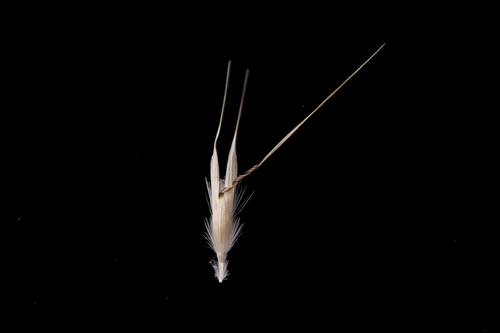
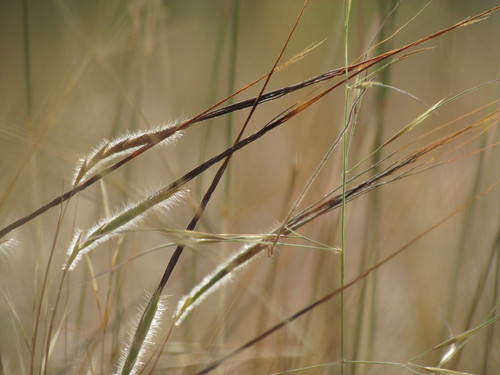
This plant grows up to 1.5 meters (4.9 feet) tall, and frequent burning benefits it in most environments. It produces characteristic dark seeds, which have one long awn at one end and a sharp spike at the other. When dry, the awn twists, and it straightens when moist; combined with the sharp spike, this structure allows the seed to drill itself into soil.
The species has many common names: black speargrass, tanglehead, steekgras in Afrikaans, and pili in Hawaiian, with pili ultimately deriving from Proto-Austronesian *pilit₁ meaning "to adhere/stick". Across most of its native range, H. contortus is a valuable pasture species. However, it caused the collapse of the wool industry across much of Australia: its seeds become embedded in sheep's wool and skin, devaluing wool and killing the sheep. The seeds also cause similar injuries to thick-coated dogs, and can embed in the socks and skin of hikers.
There are several recorded traditional uses of this species. Native Hawaiians used pili to thatch hale, traditional houses. The Hawaiian ruler Pilikaʻaiea was named after this grass, and his royal line is called the Pili line (Hale o Pili). Indigenous Australian communities in the Northern Territory sometimes suck the plant to get its sweet liquid.