About Heteropoda tetrica Thorell, 1897
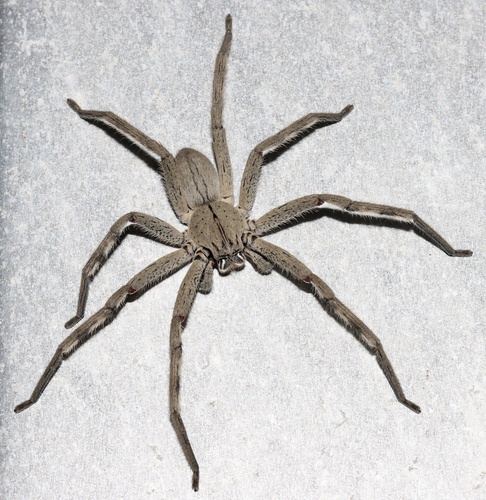
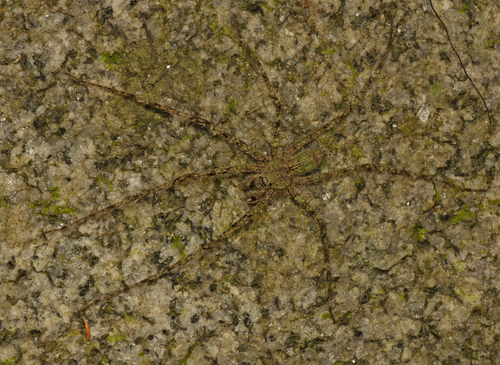
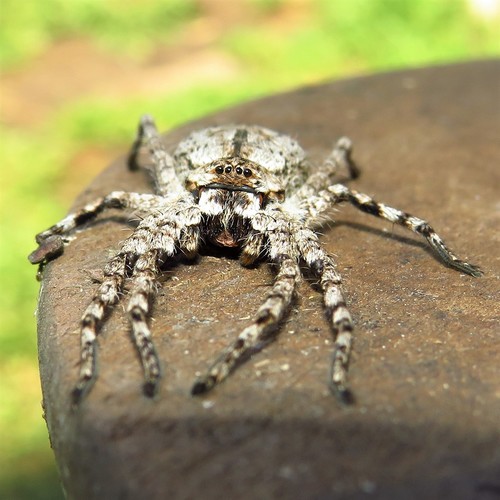
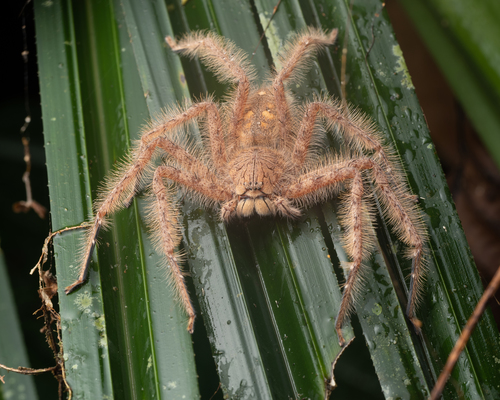
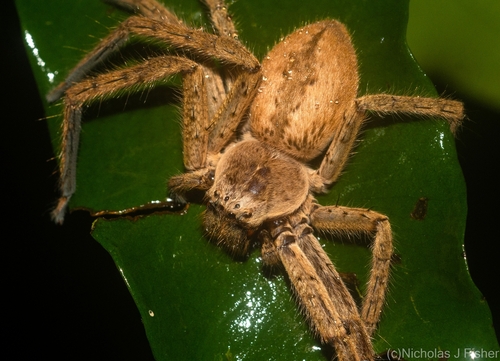
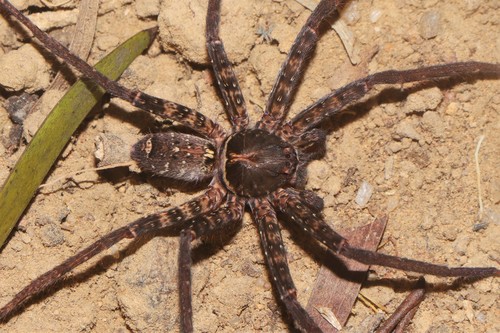
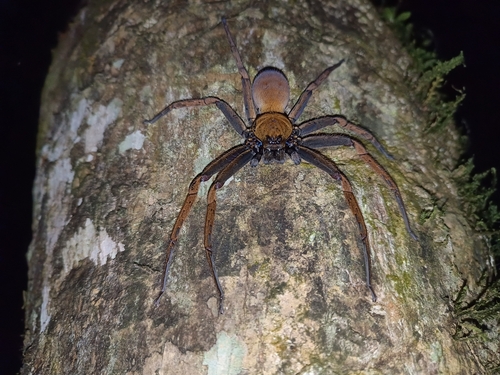
Heteropoda tetrica Thorell, 1897 is a medium to large species of huntsman spider. Females of the species can reach a maximum body length of 30 millimeters, with a leg span that is significantly larger than the body. Males are generally smaller, with a body length of around 24 millimeters. This species has the typical flattened body form that is characteristic of all huntsman spiders. Its general coloration ranges from dark brown to blackish-brown, and sometimes carries a reddish tinge. The body is covered in dense olive-colored or testaceous-olive pubescence. The abdomen may have a narrow, longitudinal pale stripe along its anterior portion. The legs and palps are covered in dense reddish or sub-testaceous-olive pubescence. Males can be distinguished from females by their longer legs, more closely spaced eyes, and distinctive palpal structure. Male palps are elongated, with a characteristic tibial apophysis that forms a long oblique transverse ridge; the superior-anterior angle of this structure produces a long, strong process. The female epigyne is made up of two oblong diverging elevations. These elevations are rounded at the posterior end and truncated at the anterior end, positioned closely adjacent to one another and separated by a narrow longitudinal groove. This species is distributed across the region ranging from China to Indonesia (Sumatra). It has been recorded at various locations throughout Southeast Asia, and detailed studies have confirmed its presence in Myanmar, Thailand, and southern China, particularly in Xishuangbanna Dai Autonomous Prefecture.