About Heteropoda amphora Fox, 1936
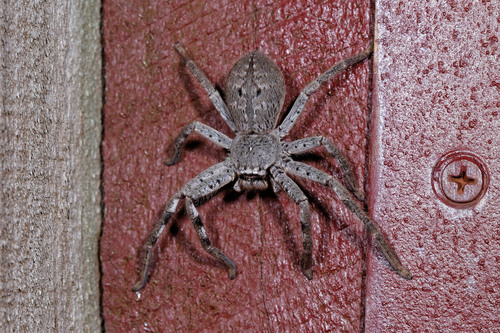
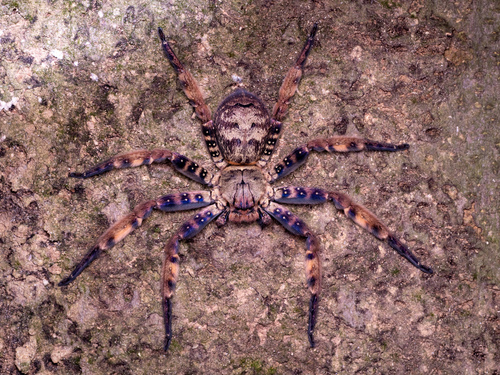
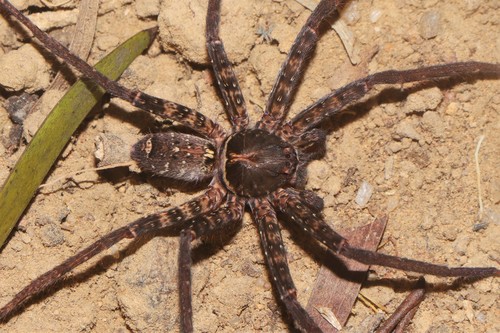
Heteropoda amphora Fox, 1936 is a relatively large species of huntsman spider. Mature females of this species have a maximum total body length of 16.45 mm. In this measurement range, the carapace is approximately 7.85 mm long and 8.60 mm wide, while the abdomen is roughly 8.60 mm long. Irving Fox’s original description of the species recorded a specimen with a total body length of 18 mm. The carapace is brown, with yellowish-white horizontal stripes at its posterior end, and a single white horizontal stripe on the forepart of the carapace. The eye region is reddish, and the sternum is yellowish-brown. The legs are yellowish-brown with black markings, and some specimens may lack the fourth leg. The abdomen is black with distinct white markings: there are two white spots on the anterior end of the dorsal abdomen, and irregular white markings on the posterior dorsal surface. The ventral surface of the abdomen is brown. This species can be told apart from the closely related similar species Heteropoda jasminae by the structure of the female reproductive organs. Specifically, the lateral margins of the septum are parallel in their middle section, and narrow only slightly towards the posterior end; in H. jasminae, the lateral margins narrow continuously from the anterior end all the way to the posterior end. Heteropoda amphora is found across multiple provinces in China: Jiangxi, Guangxi, Sichuan, and Zhejiang. In 2024, the species was recorded for the first time from Jiangxi Province, specifically at Guanshan National Nature Reserve in Yifeng County.