About Heterodon simus (Linnaeus, 1766)
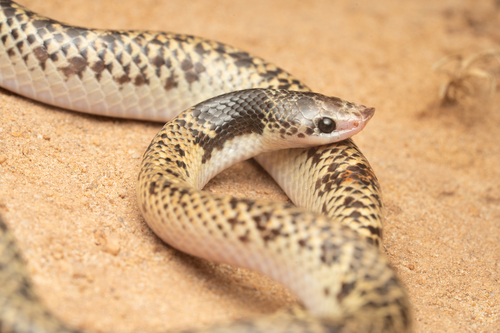
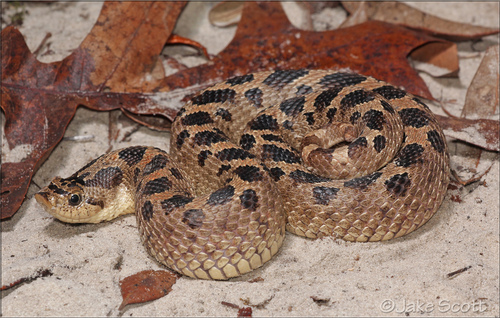
Adults of Heterodon simus, the southern hognose snake, measure 35.5–61 cm (14–24 inches) in total length. They have a stout build, wide neck, and a sharply upturned snout, and typically have 25 rows of keeled dorsal scales at midbody. Their dorsal coloration has a base shade of light brown, yellowish, grayish, or reddish, marked with a distinct row of dark blotches that alternate with smaller blotches along the flanks. In juvenile individuals, the belly is distinctly darker than the underside of the tail; as the snake ages, the entire underside usually turns pale white. This species occupies native xeric grassland habitats, including longleaf pine sandhill, upland pine forest, and scrubby flatwoods. In some regions, populations survive in habitat mosaics made up of overgrown pastures, dry river floodplains, open fields, and pine plantations. The southern hognose snake occurs on the coastal plain of the southeastern United States, ranging from North Carolina south to Lake Okeechobee in Florida, and west to Mississippi. Heterodon simus is oviparous. Mature adults mate between April and August, and lay clutches of 6 to 14 thin-shelled, leathery, whitish eggs. Eggs hatch after an incubation period of 55–60 days, and each newly hatched hatchling measures 15–18 cm (6–7 inches) in total length.