About Heterodon nasicus Baird & Girard, 1852
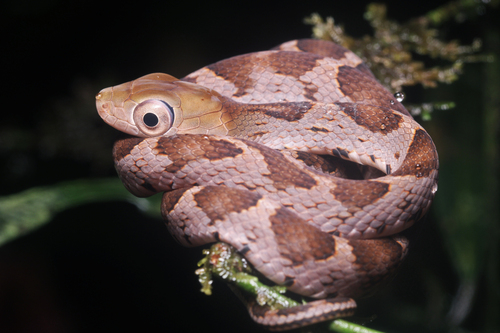
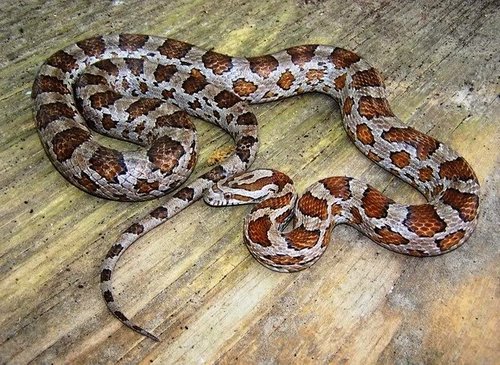
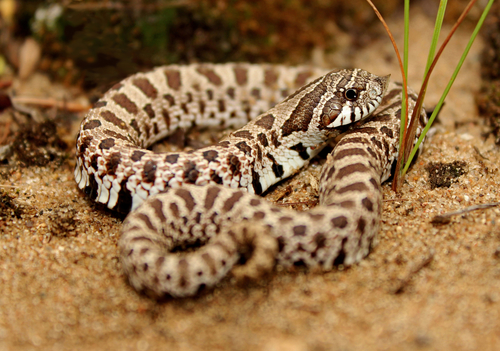
The western hognose snake, scientifically named Heterodon nasicus Baird & Girard, 1852, is a relatively small, stout-bodied colubrid snake. Its color and pattern vary greatly between subspecies, and most individuals look very similar to rattlesnakes to untrained observers; this resemblance is considered to be an example of Batesian mimicry. Adult males are considerably smaller than adult females, and mature individuals very rarely reach a total length (including the tail) of more than 40–50 cm (15–20 inches). The species gets its common name "hognose" from its modified, upturned rostral (nose) scale, which gives the snake a distinctively hog-like snout shape. This upturned scale is an adaptation that makes the western hognose snake a skilled burrower. This species is not dangerous to humans. Extremely rare bites from this rear-fanged snake have never resulted in recorded human deaths or systemic effects. While rare bites may occasionally be medically significant, the western hognose snake is not generally classified as venomous. When capturing and subduing prey, the snake releases modified saliva from its Duvernoy's Glands, which travels down a groove in its rear fang. In captivity, this species has been selectively bred to produce more than 50 distinct designer color morphs. The western hognose snake's range extends from southern Canada, through the United States, to northern Mexico. It most often occupies habitats with sandy or gravelly soils, including prairies, river floodplains, scrublands, grasslands, semi-deserts, and some semiagricultural areas. It has been recorded at elevations up to 2,500 m (8,200 feet). Adult western hognose snakes have been observed mating as early as February and March. This species is oviparous; females lay between 4 and 23 elongate, thin-shelled eggs between June and August. The eggs take approximately 60 days to hatch. Newly hatched juveniles measure 13–23 cm (5–9 inches) in total length, and individuals reach sexual maturity after roughly two years, with maturation determined more by size than by age.