About Heterobasidion annosum (Fr.) Bref.
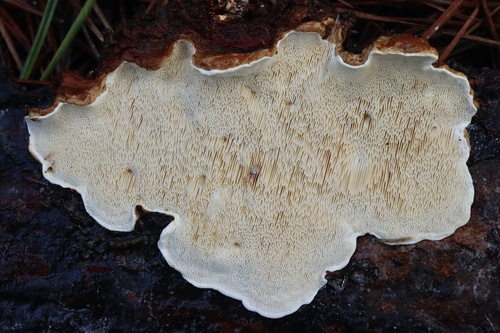
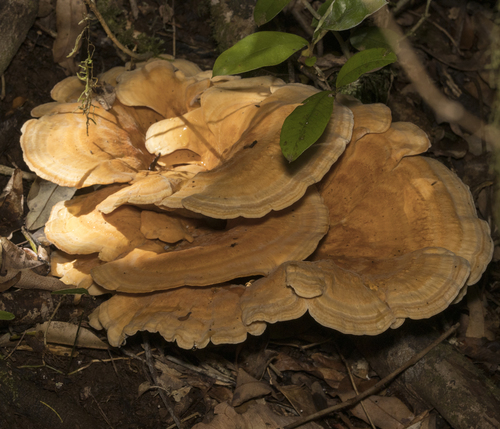
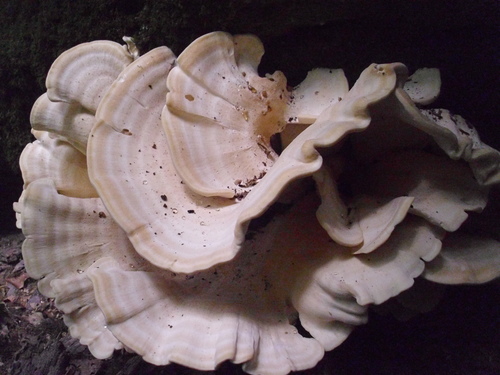
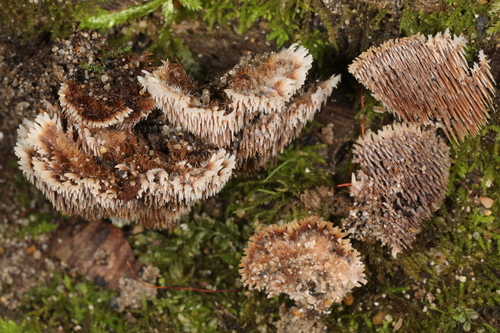
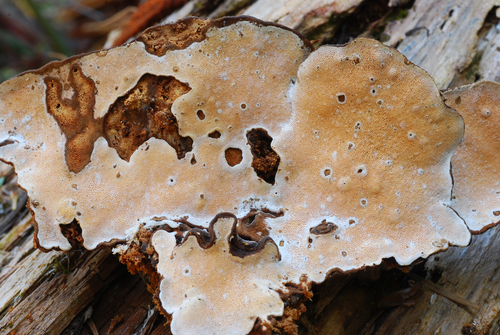
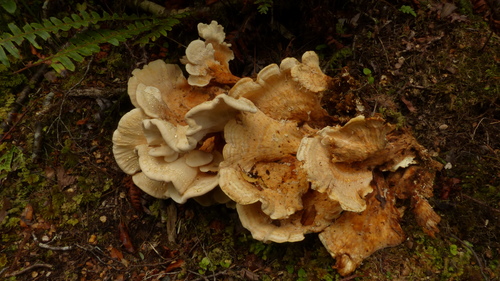
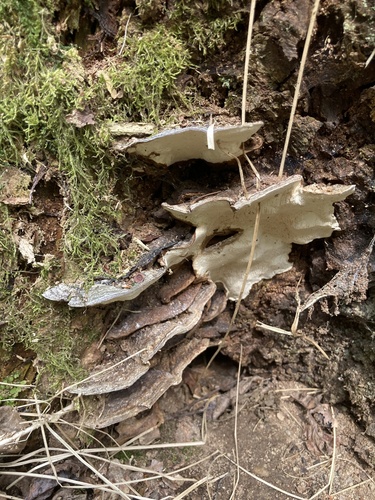
Heterobasidion annosum (Fr.) Bref. produces fruiting bodies called basidiocarps, which most commonly grow as brackets. These brackets have whitish margins, an uneven, knobbly dark brown upper surface, and turn black with age. Basidiocarps can also take a resupinate form, appearing as a plain white crust corresponding to the underside of the bracket form. Fully grown basidiocarps can reach around 40 cm in diameter and 3.5 cm thick. The fertile lower surface of the fruiting body is white, bruises easily to brown, and has barely visible pores, with 3 to 4 pores per millimeter. The fungus' flesh has a strong fungal odor; it is elastic when young and becomes woody as it ages. This fungus produces two types of spores: sexual basidiospores formed in the fertile layer on the lower surface of basidiocarps, and asexual conidiospores produced on microscopic conidiophores that break through the surface of host trees. Both spore types are produced by the species, and basidiospores are the more important for infecting conifers. Heterobasidion annosum is inedible. This species is endemic to the United States. It was introduced to Italy during World War II, carried to the region in wooden crates. In summer, basidiospores — the fungus' primary infective propagules — are released and carried long distances by wind. They typically infect conifer trees through sites of damage, most often freshly cut stumps. After colonizing a stump, the fungus grows into the stump's roots via mycelium. It spreads short distances from the roots of an infected stump to other trees through root grafts, and can also be spread by root-feeding insects. Because the fungus cannot move far through soil on its own, it relies on tree roots to reach neighboring trees. It grows through root tissue at a rate of 0.1 to 2.0 meters per year. This gradual spread causes tree death and eventually creates open disease gaps in forest canopies when infected trees die and fall. These gaps change levels of moisture and sunlight, altering habitat conditions for plants and animals living on the forest floor. The asexual stage of this fungus is called Spiniger meineckellus, which grows on stumps in moist conditions. Conidiospores produced by this stage can survive in soil for up to ten months. The role of conidiospores in the infection process is unknown, and they are not thought to be important for infection.