About Herpestes javanicus auropunctatus (Hodgson, 1836)
This is the small Indian mongoose subspecies Herpestes javanicus auropunctatus, first described by Hodgson in 1836.
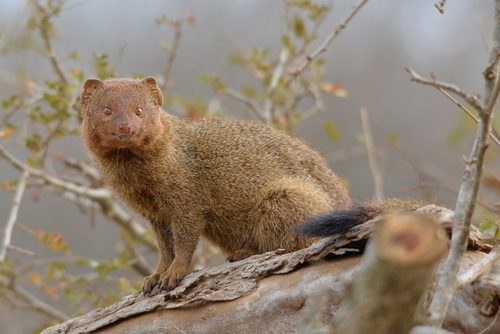
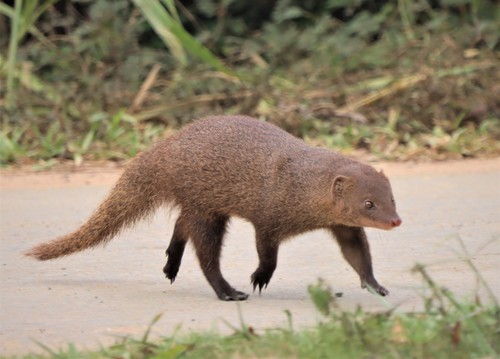
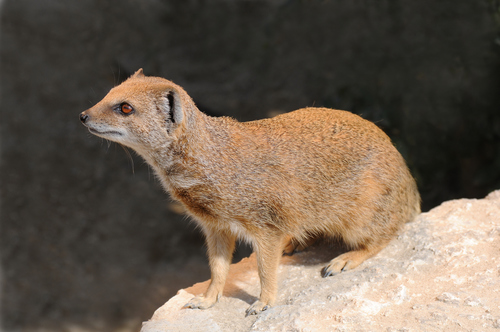
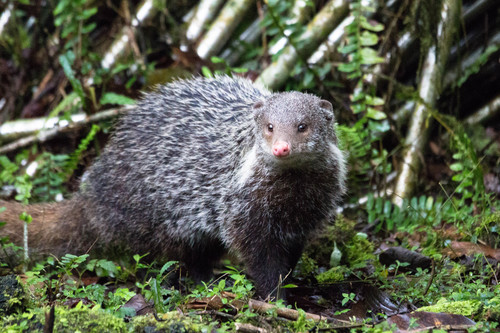
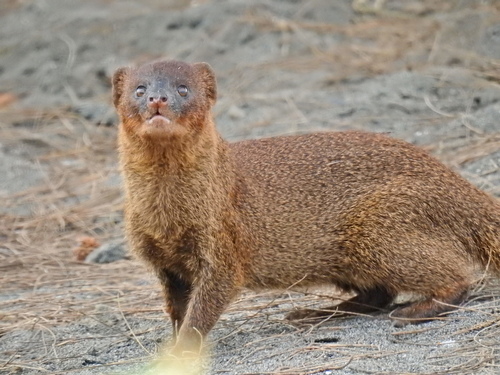
Description: The Javan mongoose's back fur ranges in colour from ferruginous to sepia, and is often a rich tawny brown. It has short hairs covering its ears, and a tapering tail.
Distribution and habitat: It is native to Myanmar, Thailand, Cambodia, Vietnam, Laos, Peninsular Malaysia, and the Indonesian islands of Sumatra and Java. It can live at elevations up to 1,800 m (5,900 ft). Its presence in China is currently uncertain. Camera traps in Thailand have captured this mongoose across a range of habitats, including degraded mixed deciduous forest, dry evergreen forest, dry dipterocarp forest, abandoned plantations, and pineapple fields.
Behaviour and ecology: The Javan mongoose is primarily solitary, though males will occasionally form social groups and share burrows. Female gestation lasts up to 49 days, and a litter contains 2 to 5 young. Males can reach sexual maturity as early as 4 months of age. Their diet consists mostly of insects, but they are opportunistic feeders that also consume crabs, frogs, spiders, scorpions, snakes, small mammals, birds, and eggs.