About Hemiechinus auritus (Gmelin, 1770)
Nomenclature
This species is the long-eared hedgehog, with the scientific name Hemiechinus auritus (Gmelin, 1770).
Body and Tail Length
The combined length of its head and body is approximately 120–270 mm, while its tail measures 10–50 mm long.
Skull Dimensions
Its skull is around 38–48 mm in length.
Skull Bone Morphology
Unlike other hedgehog species, the pterygoid bones of its skull do not inflate, and do not transmit information to the tympanic membrane.
Ear Characteristics
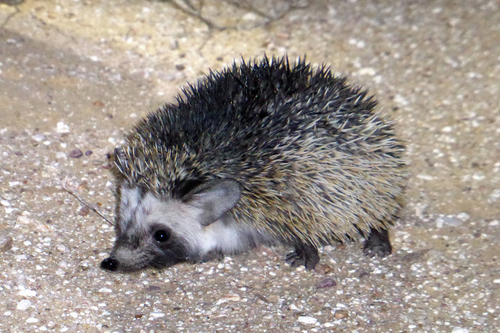
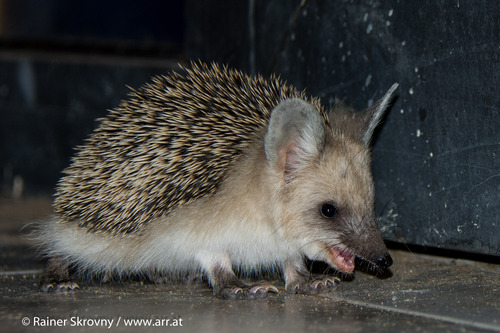
This hedgehog’s ears are 30–45 mm longer than the closest spine to them, and the ears are used to radiate excess heat in desert environments.
Sensory Abilities
Long-eared hedgehogs have very sharp senses of hearing and smell, which they use to locate food and detect predators.
Spine Muscle Sheath
The spines of the long-eared hedgehog are embedded in a unique muscle sheath that forms a bag-like structure which provides protection.
Anti-predator Spine Response
If threatened, the hedgehog can withdraw into this pouch and raise its spines to fend off predators.
Dorsal Spine Coloration
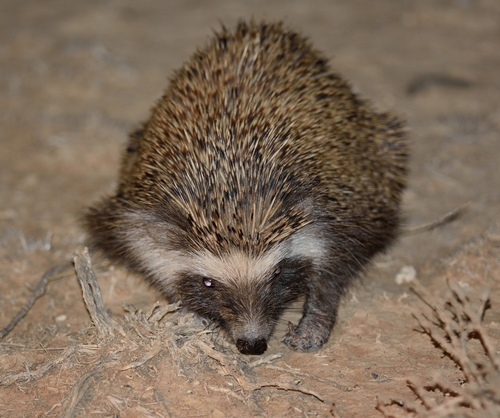
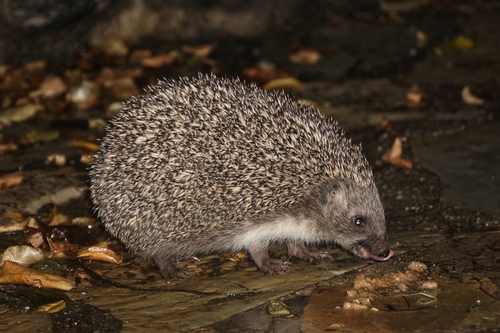
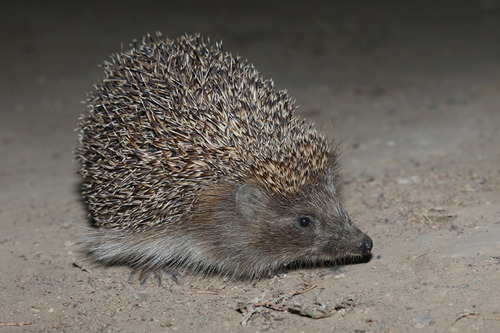
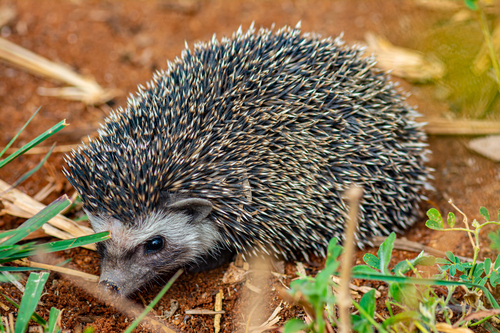
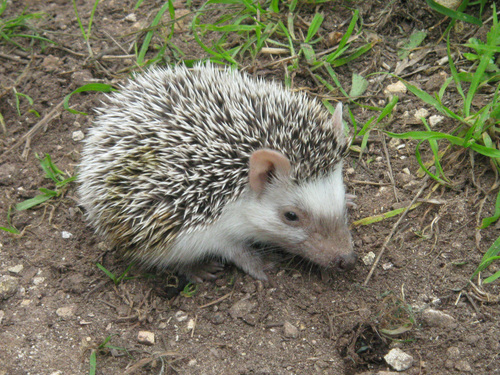
The spines along the hedgehog’s back have white tips, with darker banding on the parts of the spines below the tips.
Facial Markings
Long-eared hedgehogs do not have alternating dark and light patches on their faces.
Nape Spine Feature
They also lack the gap in spines at the back of the neck that is common to other hedgehog species.
Underbelly and Ear Hair
The long-eared hedgehog has a light-colored underbelly, and whitish hairs on the tips of its ears.
Foot Hair Coverage
The tops and heels of its feet are covered in hair, but the soles of the feet are hairless and bare.
Size and Weight
The long-eared hedgehog is smaller than the West European hedgehog, weighing between 250 and 400 grams, and is much faster.
Predator Avoidance Behavior
When approached by predators, it is less likely to curl into a ball, and instead will usually try to outrun predators or leap toward them with its relatively short spines.
Overall Geographic Range
The range of Hemiechinus auritus extends from the eastern Mediterranean region, through the arid and steppe areas of Asia, to western Pakistan in the south; in the north, its range stretches from eastern Ukraine through Mongolia (including the Gobi desert), to Xinjiang, China.
Native Countries
This species is native to Afghanistan, China, Cyprus, Egypt, Iran, Iraq, Israel, Kyrgyzstan, Lebanon, Libya, Mongolia, Pakistan, Russia, Syria, Tajikistan, Turkey, Turkmenistan, Ukraine, and Uzbekistan.
Climate Preference
The long-eared hedgehog prefers intermediate climates, avoiding both hot deserts and colder northern mountain areas.
Rainfall Preference
It also favors areas with moderate annual rainfall between 100 and 400 mm.
Broad Habitat Types
It inhabits a variety of dry steppes, semi-deserts, and deserts.
Specific Habitat Locations
It prefers dry river valleys, gullies, forest shelter belts, abandoned irrigation ditches, and shrubby areas, and often settles in oases and around human settlements, and sometimes lives in cultivated habitats.
Burrow Characteristics
Long-eared hedgehogs live in burrows that they dig under bushes; these burrows are 45 cm long and have only one opening.
Burrow Use
They may also move into abandoned burrows dug by other small mammals.
Activity Pattern
They are nocturnal and solitary.
Daytime Resting Spots
During the day, they rest under rocks, in hollows, or among rock piles.
Breeding Season
The long-eared hedgehog breeds only once a year, during the summer months from July through September.
Reproductive Spine Adaptation
The presence of spines does not interfere with this species’ ability to reproduce.
Gestation Period
The gestation period for long-eared hedgehogs is 35–42 days.
Litter Characteristics
Females have 8–10 nipples, and typically give birth to 2–3 babies per litter.
Juvenile Feeding Development
Baby long-eared hedgehogs begin eating solid food after just one week.
Neonatal Spine Growth
They are born with very few spines, and their spines double in size within five hours after birth.
Juvenile Spine Development
After two weeks, the babies are fully covered in their new spines.