About Hemiargus ceraunus (Fabricius, 1793)
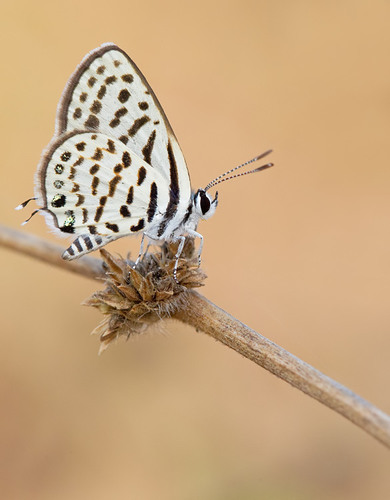
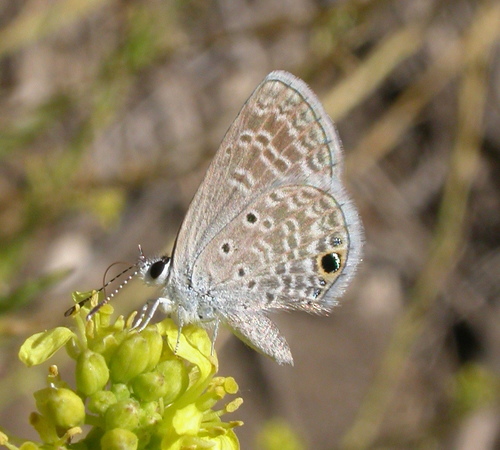
Hemiargus ceraunus, commonly known as the Ceraunus blue, is a butterfly species that belongs to the family Lycaenidae. Johan Christian Fabricius first formally described this species in 1793. This butterfly's range extends from the southwestern United States, southern Texas, Florida, and the Florida Keys, southward through the West Indies, Mexico, and Central America to reach South America. Occasional stray individuals may also be found in North Carolina, Missouri, Kansas, and Nevada. It occupies habitats including open woodland, desert scrub, sand dunes, pastures, road edges, and vacant lots. The wingspan of adult Hemiargus ceraunus measures between 20 and 30 mm. In southern Texas and southern Florida, adults are active year-round; in other parts of the species' range, adults are active during the late summer. Adult butterflies feed on flower nectar, while larvae feed on the flowers and seedpods of a variety of woody legumes, including Cassia brachiata, Abrus precatorius, and species from the Prosopis genus.