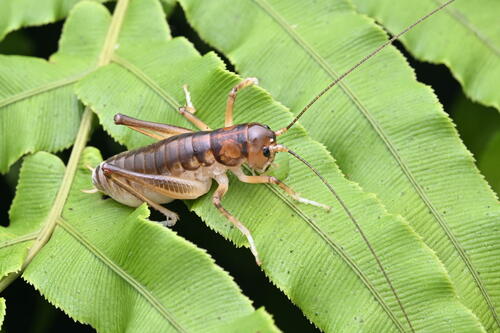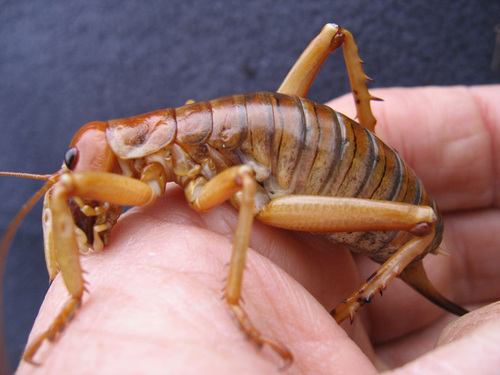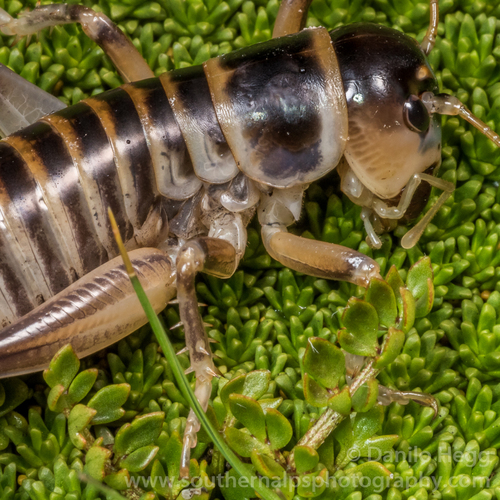
About Hemiandrus focalis (Hutton, 1896)
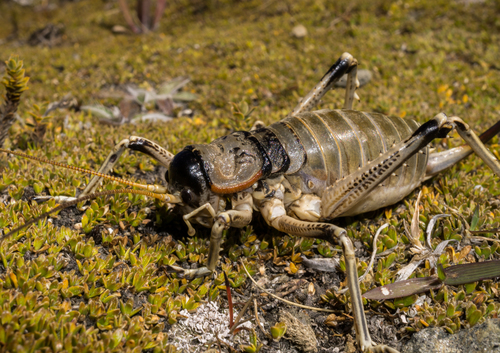
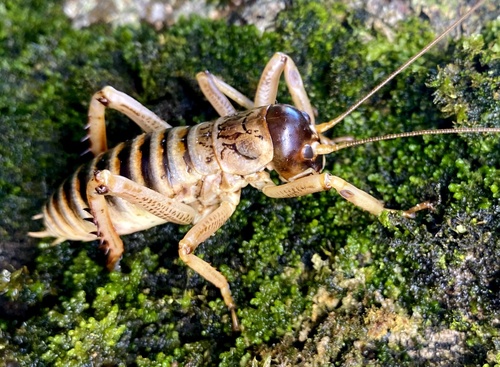
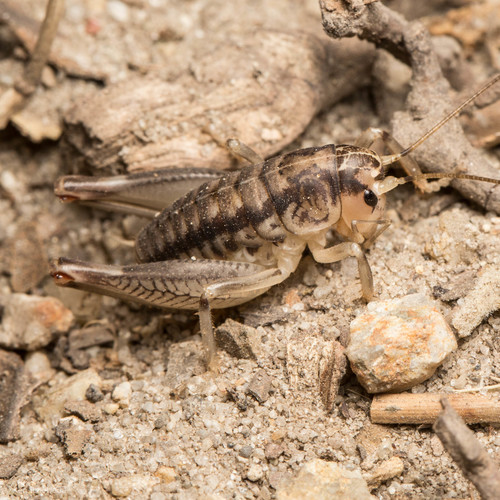
Morphology: This ground wētā species can be distinguished from other ground wētā by three superior retrolateral spines on its mid tibia, and females of this species have relatively long ovipositors. Ovipositor length varies between different ground wētā species. Hemiandrus focalis is one of roughly ten Hemiandrus species where females have long ovipositors. The tarsus of H. focalis is described as bare, with only a small number of erect setae. Habitat and distribution: All species in the genus Hemiandrus are nocturnal. During the day, H. focalis individuals shelter in soil burrows located in native forest, or in burrows in stony silts in open habitats. The range of this species extends to high elevations in the alpine zone above the tree line. Hemiandrus focalis is distributed across the mountains of New Zealand's South Island, and is also found on Codfish Island.