About Hemeroplanes ornatus Rothschild, 1894
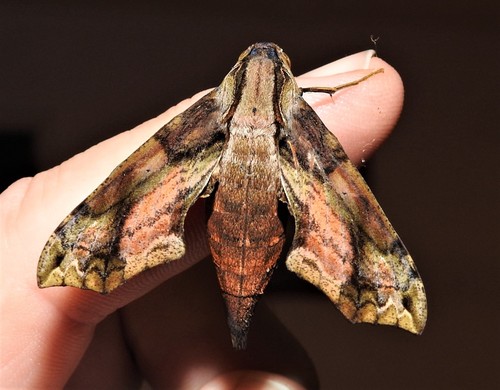
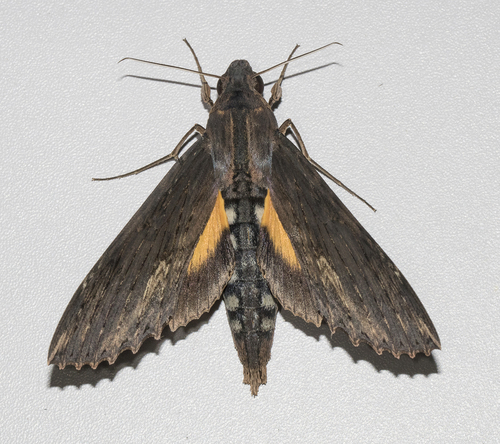
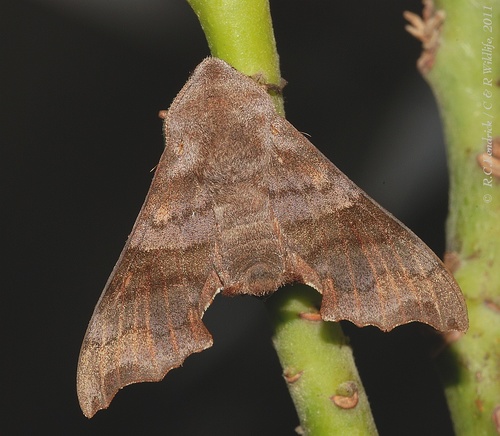
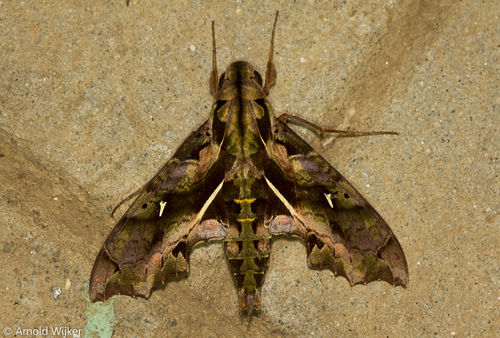
Hemeroplanes ornatus, first described by Rothschild in 1894, has a primarily light brownish gray base color with green, pink, and dark brown markings. A short silver mark is located within the forewing cell. A greenish-brown stripe runs the full length of the abdomen, and three yellow lateral stripes appear on the abdomen's second, third, and fourth segments. During its life cycle, adult females produce and release pheromones to attract males. The species' caterpillar is green, which allows it to camouflage against its host plant, Fischeria panamensis. When disturbed, the caterpillar hangs from the host vine using its prolegs and inflates its head and thorax. The underside of the caterpillar's body is brown, and it has a pair of false eyes on the thorax that give it the appearance of a small snake. The disturbed caterpillar will also move back and forth to strike at approaching predators.