About Helonias bullata L.
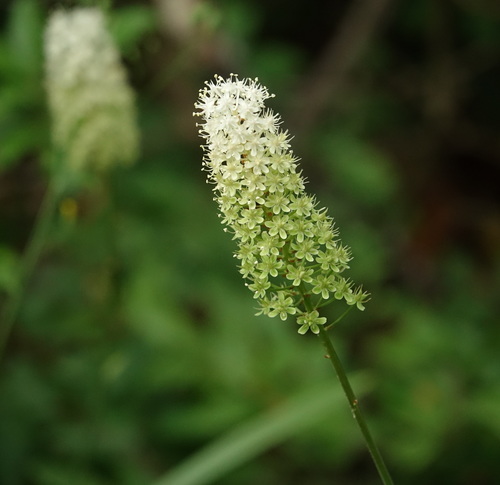
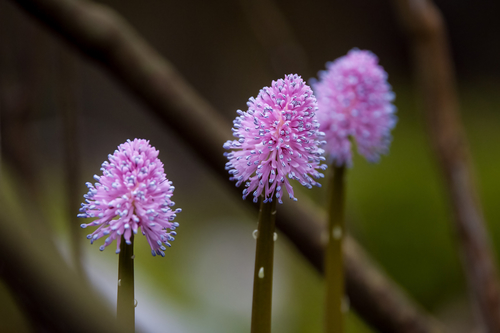
Helonias bullata, commonly called swamp pink, is a rare perennial rhizomatous herb that is native to the eastern United States. Compared to the visible size of the plant above ground, it has an extensive root system. It blooms from March to May, producing fragrant pink flowers that grow in a cluster at the end of a vertical spike, which can reach up to 3 ft (0.91 m) in height. Its evergreen, lance-shaped leaves have parallel veins, range in color from dark green to light yellow green, and grow together in a basal rosette. Swamp pink is a federally threatened species. Historically, its range extended from Staten Island, New York, to the southern Appalachians. The majority of the world's total population of swamp pink is found in New Jersey, and additional populations exist in six other states: Delaware, Maryland, Virginia, West Virginia, North Carolina, South Carolina, and Georgia. There is unconfirmed evidence that a population of swamp pink still survives on Staten Island. Populations are sometimes targeted by poachers, including plant enthusiasts who value this species' early bright pink blooms. Poached plants almost never survive after being moved. This is because swamp pink is highly sensitive to removal from its natural water-saturated environment, poachers typically underestimate how large its root mass is, and most cannot recreate the specific growing conditions the species needs to survive. The United States Fish and Wildlife Service has created a volunteer monitoring project called "Adopt-a-Swamp-Pink Population". This program has been expanded through a joint volunteer partnership with Citizens United to Protect the Maurice River and Its Tributaries, Inc. Results from the project's surveys are shared with the U.S. Fish and Wildlife Service and the New Jersey Natural Heritage database.