About Heliothis viriplaca (Hufnagel, 1766)
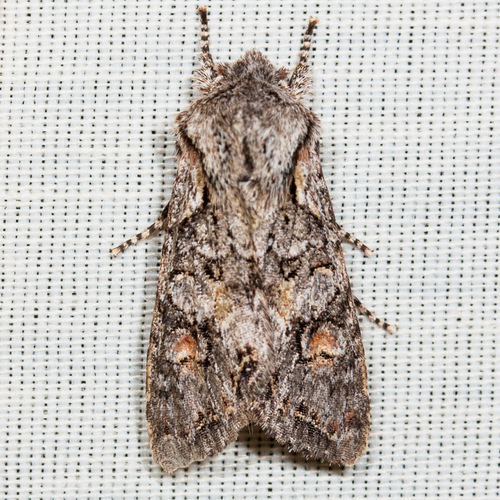
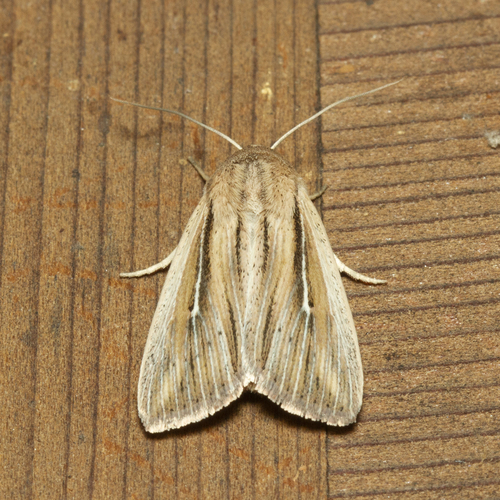
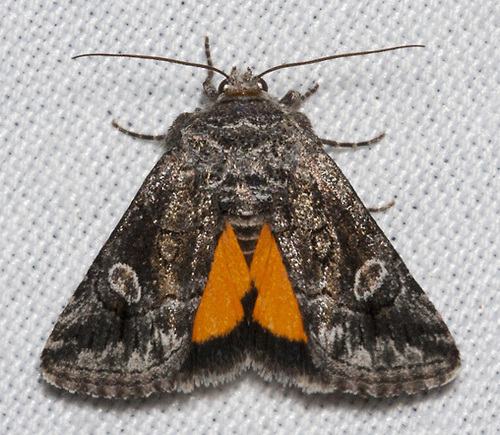
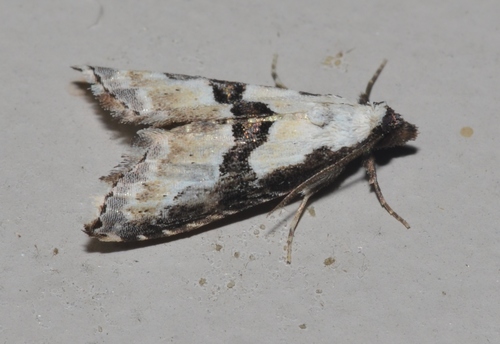
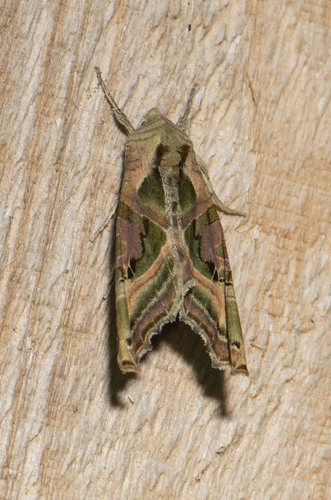
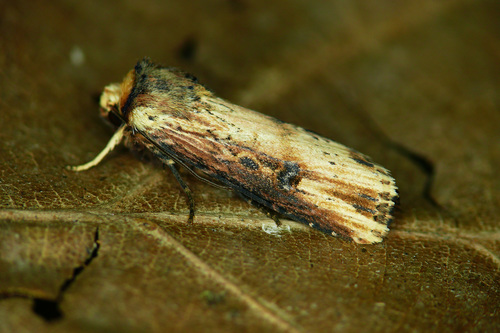
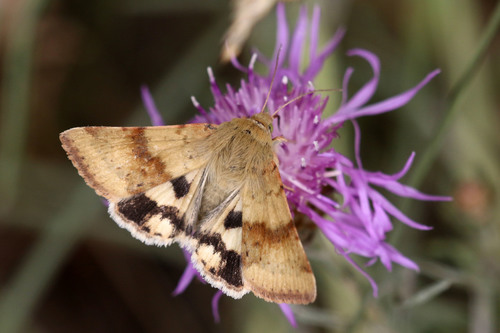
Heliothis viriplaca (Hufnagel, 1766), commonly known as the marbled clover, is a moth species belonging to the superfamily Noctuoidea. This species ranges across Europe and the entire Palearctic region, extending through Central Asia to reach Japan, Korea, and Sakhalin. In the southern part of its range, it penetrates as far as Kashmir and Myanmar. As a migratory moth, it can reach areas of northern Fennoscandia in some years. North of the Alps, both native resident individuals and immigrant individuals occur in certain areas. This heat-preferring species is found mainly on dry grasslands, fallow land, heathlands, sunny slopes, and along the edges of sand and gravel pits. The wingspan of Heliothis viriplaca measures 25–30 mm. Meyrick described the species’ wing pattern as follows: the forewings are greyish-ochreous with a slight greenish tinge, and are paler before and beyond the reniform spot; the first and second lines are indistinct; the median shade is rather dark fuscous, and confluent with the large dark fuscous reniform spot; the subterminal line is rather paler, and is preceded by a darker or fuscous fascia that is darkest at its extremities. The hindwings are ochreous-whitish, and suffused with blackish towards the base; they have a large discal spot and a terminal band that includes an ochreous-whitish spot, both of which are blackish. The larva varies in color from green to purplish-brown; it has a darker-edged dorsal line, a whitish subdorsal line with dark edging beneath it, a green or yellowish spiracular line, and a white subspiracular line; the head is green, pink, or yellowish, and marked with brown speckles. The moth flies in two to three generations between May and August. The larvae feed on plant species from the genera Crepis, Trifolium, Silene, Ononis, and Centaurea.