About Helicoverpa zea Boddie, 1850
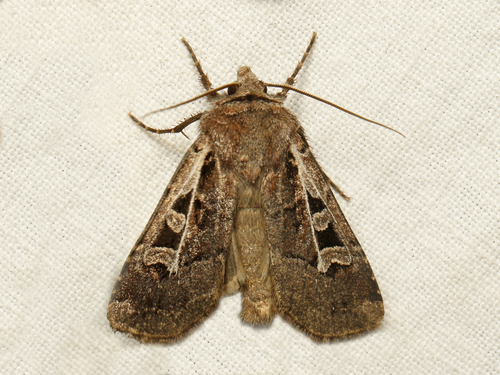
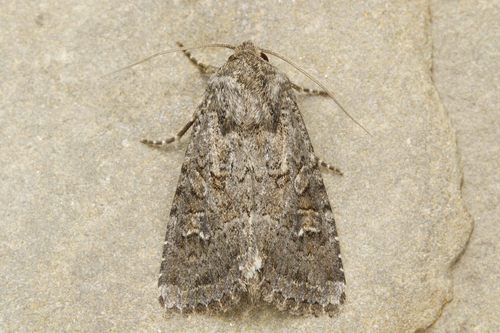
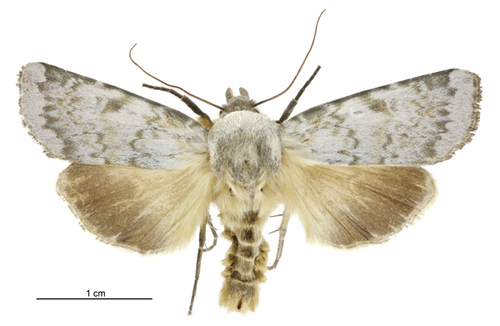
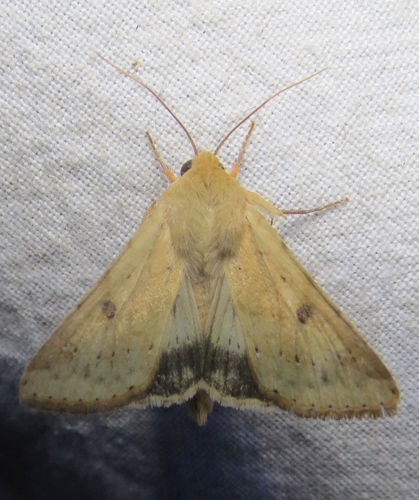
Helicoverpa zea Boddie, 1850, commonly known as the corn earworm, is a moth species in the family Noctuidae that was formerly classified in the genus Heliothis. The larval stage of this moth is a major agricultural pest. Because larvae are polyphagous, meaning they feed on many different types of plants, the species has multiple common names, including cotton bollworm and tomato fruitworm, in addition to feeding on a wide range of other cultivated crops. This species is widely distributed across the Americas, excluding northern Canada and Alaska. It has developed resistance to many pesticides, but can be managed using integrated pest management techniques: deep ploughing, trap crops, chemical control with mineral oil, and biological control. Helicoverpa zea performs seasonal nocturnal migration, and individual moths can be carried downwind for distances up to 400 km. Pupae enter diapause to survive unfavorable environmental conditions, especially at high latitudes and during drought. The corn earworm occurs in temperate and tropical regions of North America, excluding northern Canada and Alaska, because it cannot overwinter in these colder areas. Populations of Helicoverpa zea in the eastern United States also do not survive overwinter successfully. While populations can be found as far north as Kansas, Ohio, Virginia, and southern New Jersey, overwinter survival rates depend primarily on how severe the winter season is. Adult corn earworm moths regularly migrate from southern overwintering regions to northern regions each year based on winter conditions. This species is also found in Hawaii, the Caribbean islands, and most of South America, including Peru, Argentina, and Brazil. Specimens identified as this cotton bollworm were reported from China in 2002. The taxonomy of the genus Helicoverpa was poorly understood for a long time. Many older publications that reference "Heliothis obsoleta", which is currently a synonym of Helicoverpa armigera, actually describe Helicoverpa zea instead.