About Helicoverpa assulta (Guenée, 1852)
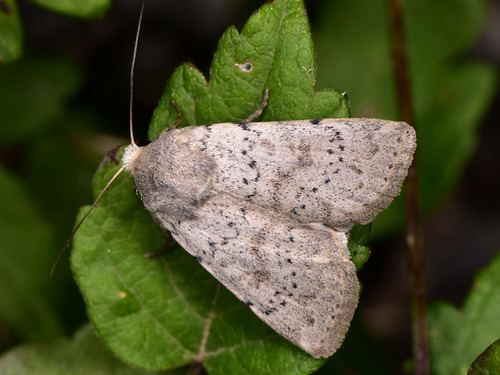
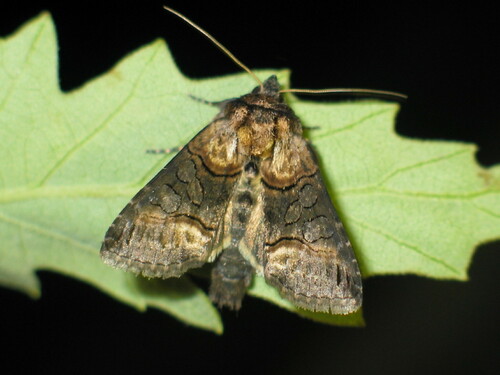
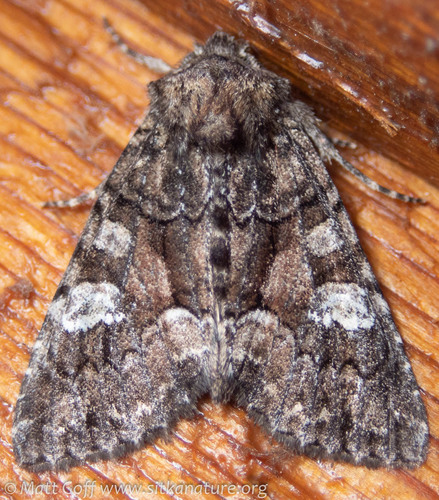
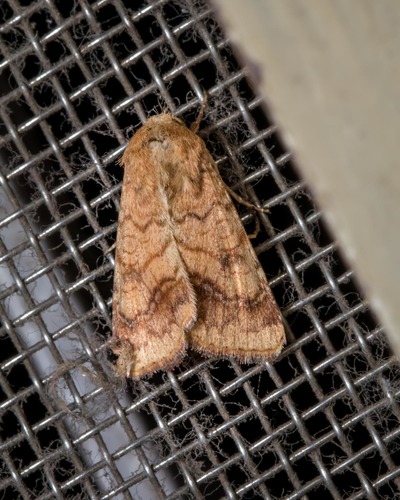
Helicoverpa assulta, commonly called the oriental tobacco budworm, is a species of moth in the family Noctuidae. Adult H. assulta are migratory, and are found across the Old World Tropics, including Asia, Africa, and Australia. This species has a brown pattern on its forewings; its hindwings are yellowish orange with a brown margin that holds a pale mark. The wingspan of H. assulta is approximately 25 millimetres, or 0.98 inches. H. assulta is closely related to the species Helicoverpa armigera and Helicoverpa zea. The larvae of H. assulta feed on a variety of Solanaceae species, including Lycopersicon, Nicotiana (specifically Nicotiana tabacum), Physalis, and Solanum. They also feed on the fruits of Physalis peruviana and Datura species. Because of this feeding behavior, H. assulta is classified as a pest of economically valuable crops, including tomatoes, tobacco, and hot peppers. Because of its pest status, developing effective methods to control this moth's behavior is a research priority. However, pest control efforts are complicated by the species' specific larval feeding behavior and its growing resistance to insecticides. H. assulta is distributed across three continents: Asia, Africa, and Australia. Within Asia, confirmed populations of H. assulta are found in China, Korea, Thailand, and Japan. Environmental factors such as temperature and geographic location can affect the fecundity of this moth. H. assulta acts as a pest of red peppers (Capsicum frutescens), tobacco (Nicotiana tabacum), tomato, and onion. It prefers feeding on red peppers over tobacco, but is still considered a pest to both. For H. assulta to develop and survive successfully, individuals must have access to nutrient-rich food, and must be able to digest and absorb these nutrients.