About Helianthus tuberosus L.
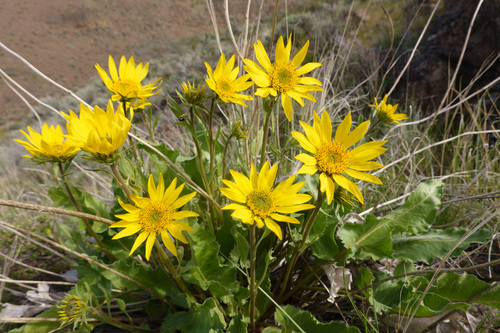
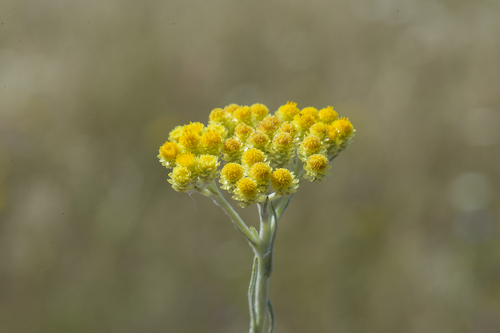
Helianthus tuberosus L., commonly known as Jerusalem artichoke, is a herbaceous perennial plant. It grows between 1.5 and 3 m (4 ft 11 in – 9 ft 10 in) tall, with opposite leaves on the lower portion of the stem and alternate leaves toward the top. Its leaves have a rough, hairy texture; larger lower-stem leaves are broad ovoid-acute, reaching up to 30 cm (12 in) long, while leaves higher on the stem are smaller and narrower. The plant produces yellow capitate flowerheads 5–10 cm (2–4 in) in diameter, each containing 10–20 ray florets and 60 or more small disc florets. The flowers are briefly fragrant, with a light vanilla-chocolate scent. The tubers are often elongated and irregular in shape, typically 7.5–10 cm (3–3+7⁄8 in) long and 3–5 cm (1–2 in) thick. They vaguely resemble ginger roots in appearance, with a crisp, crunchy texture when raw, and range in color from pale brown to white, red, or purple.
The Jerusalem artichoke grows rapidly and can reproduce from buried rhizomes and tubers, which allows it to spread uncontrollably. Vegetative propagules can be carried by rivers and streams to establish new populations along riverbanks. Dispersal by animals is also possible: animals feed on tubers and rhizomes, then excrete the propagules in new areas. Unintended escape into the wild is also a risk associated with human cultivation. The plant can also reproduce by seed, and its relatively long flowering period increases its overall reproductive potential.
Jerusalem artichoke is native to North America, and can now be found in multiple countries across North America, South America, Europe, Asia, and Australia. It is one of the most rapidly expanding invasive plant species in Central Europe. It can grow in many geo-climatic regions and a wide range of soil types, but prefers moist habitats and is less tolerant of dry conditions.
Indigenous peoples of North America cultivated H. tuberosus as a food source before the arrival of Europeans. Because planted tubers persist for years in the ground, the species naturally expanded its range from central North America to eastern and western regions of the continent. Early European colonists learned of the crop and sent tubers back to Europe, where it became a popular cultivated crop and naturalized. The plant later gradually fell into obscurity in North America, but successful commercial marketing efforts took place in the late 1900s and early 2000s. The tubers can be eaten raw, cooked, or pickled.
By composition, the tuber contains approximately 2% protein, no oil, and very little starch. It is rich in the carbohydrate inulin (8 to 13%), which is a polymer of the monosaccharide fructose. When tubers are stored over time, their inulin breaks down into its component fructose. The presence of fructose, which is around one and a half times as sweet as sucrose, gives Jerusalem artichokes an underlying sweet taste. The plant has been recorded as a folk remedy for diabetes: because inulin is not assimilated in the intestine, it does not cause the glycemic spike that potatoes produce. Temperature variation affects how much inulin Jerusalem artichoke produces; plants grow in colder regions produce less inulin than those in warmer regions.
Unlike most tubers, but like many other members of the Asteraceae family (including the common artichoke), Jerusalem artichoke stores carbohydrates as inulin (not to be confused with insulin) rather than starch. This makes the plant an important commercial source of inulin, which is used as a dietary fiber in food manufacturing.
Jerusalem artichoke can be propagated from both seeds and tubers, but using tubers produces higher crop yields. For planting, tubers are cut into pieces with three to five buds, then planted 5–10 centimetres (2–4 in) deep in soil. Jerusalem artichoke has low nutrient requirements, and needs less nitrogen than other energy crops. It is highly competitive against weeds, which simplifies weed control; however, this competitiveness also makes it difficult to grow other crops afterward, because small tubers are commonly left in the soil after harvest. The plant's high competitiveness may come from allelopathic effects, its large plant size, and rapid growth rate. Crop yields are typically high: 16–20 tonnes of tubers per hectare (7–9 short tons per acre), and 18–28 tonnes of green weight foliage per hectare (8–12 short tons per acre). Tubers left in the ground lie dormant over winter, and can tolerate temperatures as low as −30 °C (−22 °F). Jerusalem artichoke also has potential for ethanol fuel production, when fermented with inulin-adapted yeast strains.
In cooking, Jerusalem artichoke tubers can be cooked and baked in the same ways as potatoes, but can also be eaten raw unlike potatoes. They have a similar consistency to potatoes; raw tubers have a similar texture but a sweeter, nuttier flavor. Thinly sliced raw Jerusalem artichoke is suitable for salads. Because of its inulin carbohydrate content, boiled Jerusalem artichoke tubers tend to become soft and mushy, but retain their texture better when steamed. Inulin cannot be broken down by the human digestive system, but it is metabolized by bacteria in the colon. This metabolism can cause flatulence, and in some cases gastric pain. In 1621, John Gerard's Herbal quoted English botanist John Goodyer's description of Jerusalem artichokes: which way soever they be dressed and eaten, they stir and cause a filthy loathsome stinking wind within the body, thereby causing the belly to be pained and tormented, and are a meat more fit for swine than men. A 1-cup (150 g) serving of Jerusalem artichoke contains 650 mg of potassium. It is also high in iron, and provides 10–12% of the US RDA for fiber, niacin, thiamine, phosphorus, and copper.
Historically, Jerusalem artichoke was used as forage for domesticated cattle, horses, and pigs. Today, it is still used as an animal feed source and to support animal health, due to its valuable nutrient content and various bioactive compounds. For example, pigs can eat the tubers dried, directly from the ground, or consume the plant's green biomass (stalks and leaves) from pasture. Washed Jerusalem artichoke tubers can be fed to many animal species, and silage can be produced from harvested stalks and leaves. This silage has high nutrient value and satisfactory digestibility for ruminants, and its high inulin content has beneficial effects on rumen metabolism and microflora. However, cutting the plant tops to produce silage greatly reduces subsequent tuber harvest yields. A range of Jerusalem artichoke-based products are also available on the market today, including supplementary feed for horses, dogs, and small animals.