About Helianthus porteri (A.Gray) Pruski
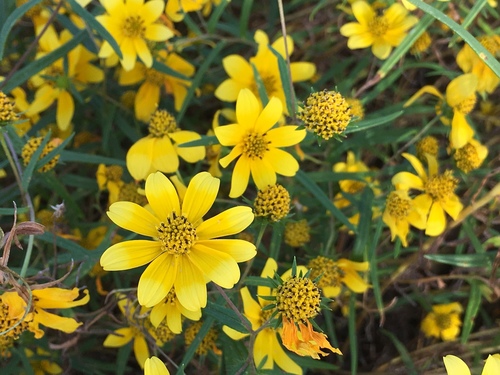
Helianthus porteri is a sunflower species with three common names: Porter's sunflower, Stone Mountain daisy, and Confederate daisy. Calling this species a daisy is inaccurate, because it belongs to the sunflower genus Helianthus, not the daisy genus Bellis or related daisy genera. While this plant grows on Georgia's Stone Mountain, its natural range extends much further beyond this location. The common name Confederate daisy gets its association with the Confederacy from the Confederate monument located on Stone Mountain, but this connection is weak. The species was actually named in 1849, before the American Civil War, by Harvard botanist Asa Gray. Gray named it to honor Thomas Conrad Porter, a Pennsylvanian minister and botanist who collected the plant in Georgia. Gray originally classified the species as Rudbeckia porteri. In 1998, John F. Pruski reclassified it into the genus Helianthus, creating its current scientific name Helianthus porteri (A.Gray) Pruski. This species is native to the southeastern United States, specifically Alabama and Georgia. It has been introduced to granite outcrop areas in North Carolina, where it grows as an aggressive weed. Helianthus porteri grows in thin soils located on and around flat outcrops of granite and gneiss. It is an annual herb that can reach up to 100 cm (40 inches) in height. A single plant usually produces 5 or more flower heads. Each flower head holds 7 or 8 yellow ray florets, which surround 30 or more yellow disc florets.