About Helianthus grosseserratus M.Martens
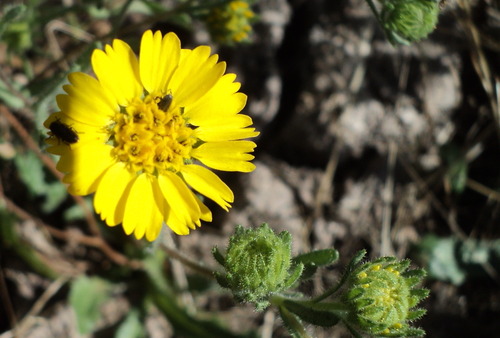
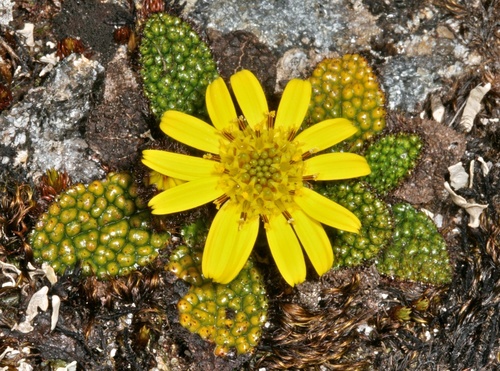
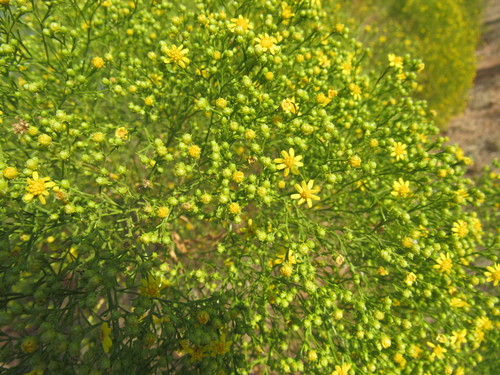
Helianthus grosseserratus, commonly called sawtooth sunflower or thick-tooth sunflower, is a perennial sunflower species in the family Asteraceae that produces a large flowering head (inflorescence). Most plants reach 3 to 7 feet (91 to 366 cm) in height, though some individuals can grow as tall as 12 feet. This species grows along streams, in damp prairies, and along roadsides, distributed across the eastern and central parts of Canada and the United States. It occurs primarily in the northern Great Plains and Great Lakes Region, with additional established populations found as far from this core range as Maine, Georgia, and Texas. It grows best in full sun and moist, fertile loamy soil that has a high organic content. Its leaves are simple, lanceolate, glossy, and arranged alternately along stems. Mature leaves reach 4 to 12 inches (10 to 30 cm) in length and 1 to 4 inches (2 to 10 cm) in width. Leaf margins have large coarse teeth, which gives the species its common name sawtooth, though some leaves have margins that are nearly smooth (entire). All leaf tips are pointed. The composite flowering head is 3 to 4 inches (7 to 10 cm) wide. The disk flowers at the center of the head are golden-yellow, and blooming occurs between summer and autumn. Each head produces 10 to 20 yellow ray florets that are roughly 1.5 inches (3.81 cm) long. The fruit produced by this species is a single achene encased in a husk. A wide range of insects, birds, and mammals, including cattle, feed on either the plant itself or its seeds. Historically, Native Americans prepared a poultice from the flowers of this species to treat burns.