About Helianthus decapetalus L.
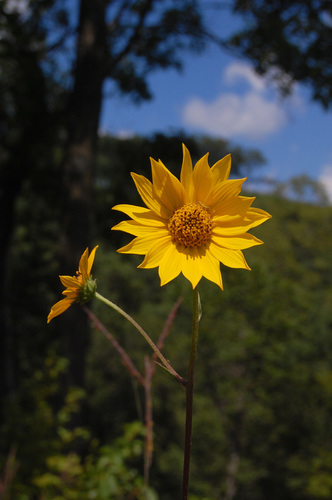
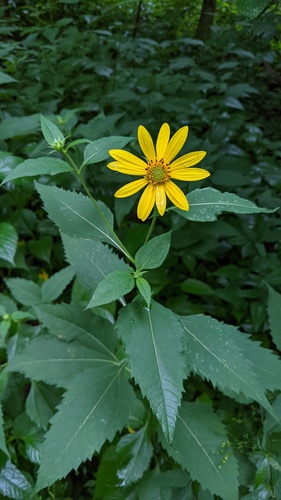
Helianthus decapetalus L. has a smooth, slender stem that grows 60 to 200 cm (2 to 7 ft) tall, and branches near the top. Its ovate or lanceolate leaves have serrated edges, and grow on petioles that are 2 to 5 cm long. Individual leaves measure 7 to 21 cm long and 4 to 10 cm wide. The plant produces 3 to 10 flowerheads; each flowerhead contains 21 to 50 disk florets, plus 8 to 12 ray florets that are 2.0 to 2.5 cm long. Its bracts are typically 11 to 16 mm long, and extend past the flower disk by at least half of their total length. The fruits are 3.5 to 5.0 mm long cypselae, with a pappus made of two scales. In terms of distribution and habitat, Helianthus decapetalus grows in floodplain forests and riverbanks in Virginia. Its native habitats include woodland and forest edges. This species only persists in areas with suitable habitat, and can be removed from a region by development, changes in land use, or competition with invasive species. Ecologically, the flowers of Helianthus decapetalus attract many types of insects, including bees and butterflies. Some butterflies, such as the painted lady and the silvery checkerspot, use this plant as a larval host. Its seeds are a food source for birds. Muskrats eat the plant's leaves and stems, and also use the stems to build their lodges.