About Heleophryne regis Hewitt, 1910
Common Name Etymology
Heleophryne regis, commonly known as the royal ghost frog, gets its common name because one of the six known ghost frog species is found in Skeleton Gorge on Table Mountain, South Africa.
Adult Body Size
This frog species measures 35–45 mm (1.4–1.8 in) in length. It falls in the same size range as Hewitt's ghost frog, but is smaller than Purcell's ghost frog.
Ventral Body Hooks
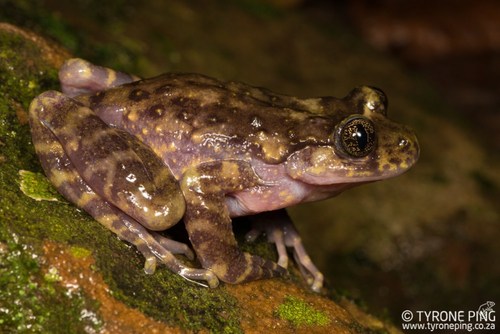
Small hooks cover the underside of its body, including the jaw, that help this frog climb across wet rocks near its habitat.
Body Coloration
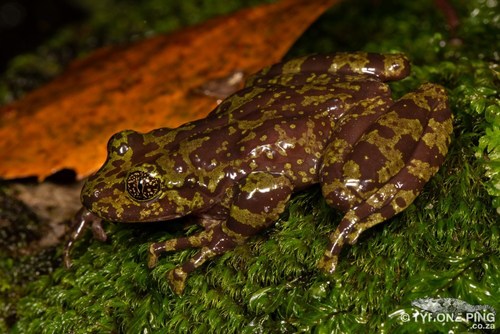
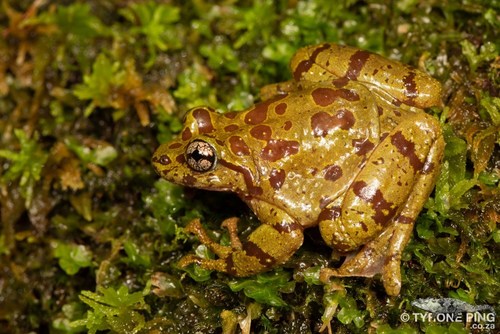
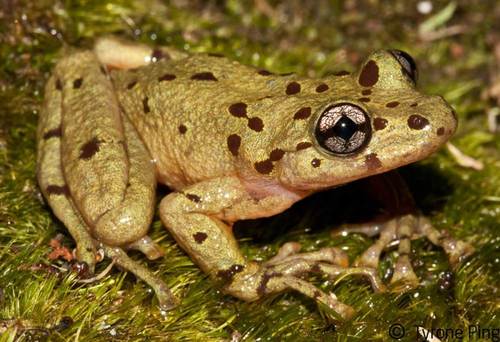
The dorsal (top) side of its body is brown with yellow spots, while its ventral (underside) is white. Its limbs are solid in color, and are flesh-colored on their undersides.
Tadpole Development
Tadpoles of this species take up to two years to fully develop.
Vocalization Traits
The call of the royal ghost frog is a harsh, creaking sound, produced at a rate of roughly one call per second.
Genus Endemic Range
All ghost frog species are endemic to the southern tip of Africa.
Species Habitat
The natural habitat of Heleophryne regis is fynbos heathland in the Western and Eastern provinces of South Africa, specifically cool mountain streams at altitudes between 230 and 790 meters.
Habitat Requirements
This species requires clean, fast-moving water to survive, so it is threatened by habitat loss.
Conservation Status
The International Union for Conservation of Nature currently classifies this species as Least Concern: despite occupying an area smaller than 20,000 square kilometres (7,700 sq mi), its habitat is not currently threatened, and the species is presumed to have a large population.
Specific Habitat Threat
One recorded threat to its habitat is siltation of freshwater streams.