About Hedycarya arborea J.R.Forst. & G.Forst.
Hedycarya arborea, commonly called pigeonwood, is a dioecious species of shrub or small tree. It grows up to 12 metres (40 feet) in height, with a trunk that can reach up to 0.5 m (1 ft 8 in) in diameter. Its bark is firm, and ranges in colour from dark grey to brown-grey. The wood is white and has a straight grain.
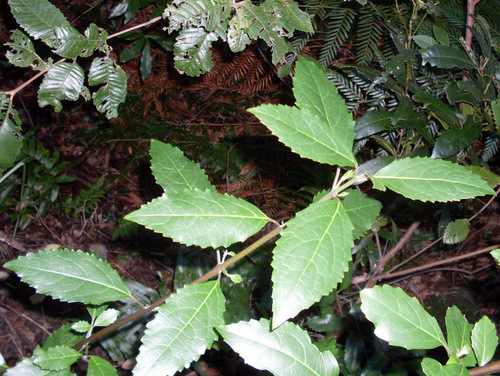
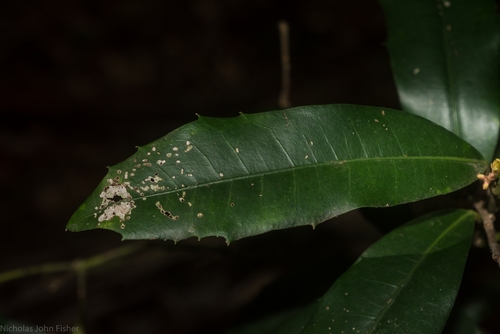
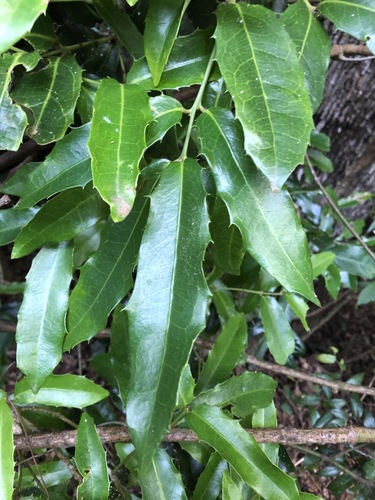
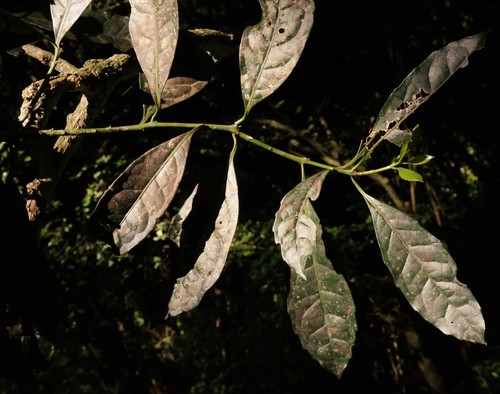
Leaves are dark green, arranged oppositely on the stem. Most are coriaceous (leather-like) and glabrous (smooth). The leaf undersides have the same texture but are a paler shade of green. Leaf petioles are usually 10–20 mm long. Leaf blades, or laminae, typically measure 40–120 × 25–30 mm, are broadly oval to egg-shaped, narrow toward the base, and have partly serrated or toothed margins. Plants from the northernmost populations of this species produce larger leaves.
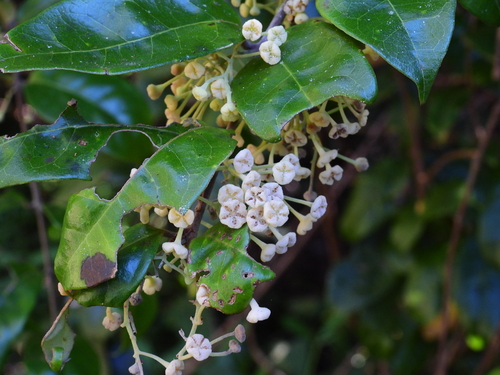
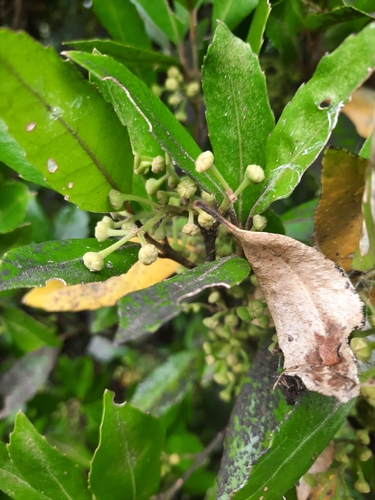
The species' inflorescences, or flower clusters, are branched racemes, with slender peduncles and pedicels. Male perianths are tiny, measuring around 10 mm in diameter, while female perianths are around 6 mm in diameter. Two different sources cite differing fruiting periods: De Lange (2026) states that fruiting occurs from March to June, while Crowe (2009) gives the fruiting period as spring to summer.
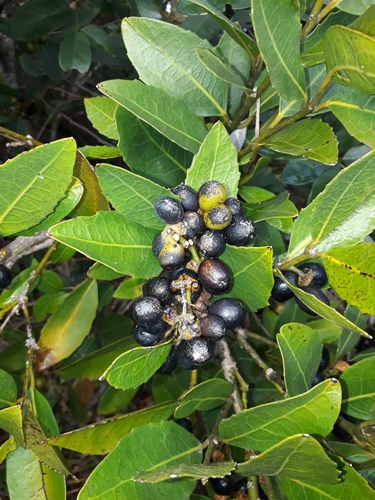
Fruits are drupes: each ovoid fruit holds one seed, measures 10–15 mm long, and is red or orange-red in colour. Endocarps are 9–14 mm long, usually oval to egg-shaped, rarely round, and brown to grey-brown in colour.
Hedycarya arborea is endemic to New Zealand, where it occurs primarily across the North and South Islands. It also grows on the Manawatāwhi / Three Kings Islands. It is sparse on the eastern side of the South Island, and grows south to Banks Peninsula or Port Chalmers within Otago Harbour. It is more common on the western side of the South Island. Botanist Thomas Kirk noted in *The Forest Flora of New Zealand* that the species' southern limit was Jackson Bay, but more recent revisions of New Zealand flora suggest the species occurs along the entire western coast of the South Island, or that its southern limit is Milford Sound. This species does not occur naturally on the Chatham or Stewart Islands.
The global conservation status of Hedycarya arborea was assessed by the IUCN Red List in 2024 as "Least Concern", with its population trend evaluated as "Unknown". In the 2023 New Zealand Threat Classification System assessment, it was classified as "Not Threatened".
This species is typically found in lowland and montane ecosystems, reaching a maximum elevation of 800 m (2,600 ft) above sea level. It is a fast-growing, highly shade-tolerant species that is most commonly found in wet environments. It commonly associates with akeake (Dodonaea viscosa), māhoe (Melicytus ramiflorus), ngaio (Myoporum laetum), and tītoki (Alectryon excelsus).
Seeds of Hedycarya arborea are dispersed by frugivorous (fruit-eating) animals, most commonly birds. Recorded bird seed dispersers include blackbirds (Turdus merula), kererū (Hemiphaga novaeseelandiae), kōkako (Callaeas), tūī (Prosthemadera novaeseelandiae), song thrushes (Turdus philomelos), and weka (Gallirallus australis). The extinct huia (Heteralocha acutirostris) also ate its fruits. This species is primarily wind-pollinated.
Introduced deer and goats feed on its leaves, while possums prefer to eat its buds and flowers. Rats also feed on the fruits of the tree. Hedycarya arborea acts as a host for two endemic New Zealand insects: Lasiorhynchus barbicornis and Calliprason sinclairi.
The wood of Hedycarya arborea is soft and not very durable. Indigenous Māori people used its timber to make various musical instruments and digging sticks. The species also had medicinal uses for Māori, who used its leaves in vapour baths. Māori did not traditionally eat its fruits, and Wardle (2011) notes that *The Poisonous Plants in New Zealand* classifies this plant as poisonous.