About Hedya pruniana (Hübner, 1796-1799)
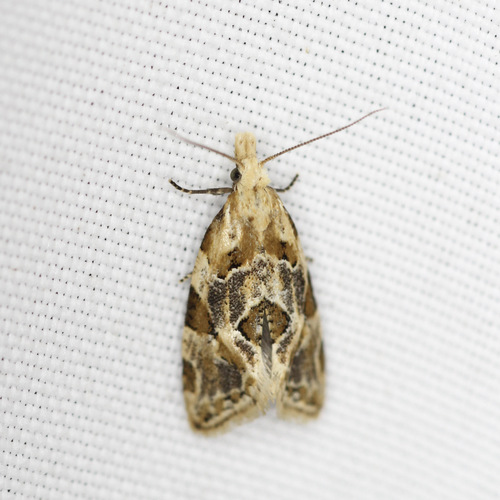
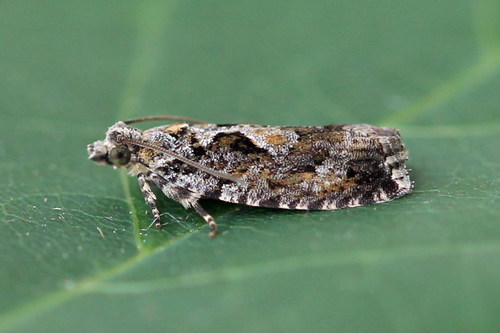
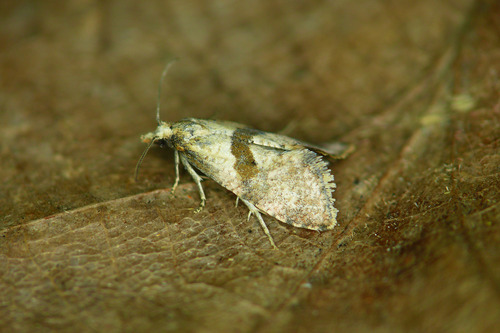
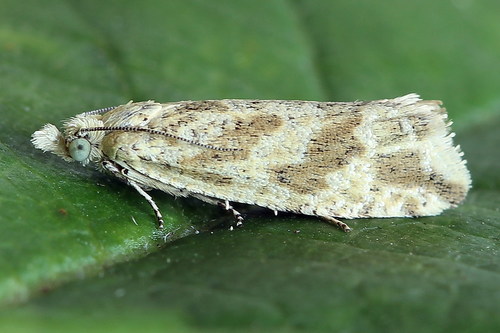
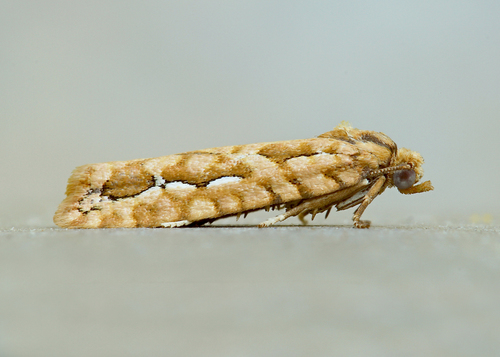
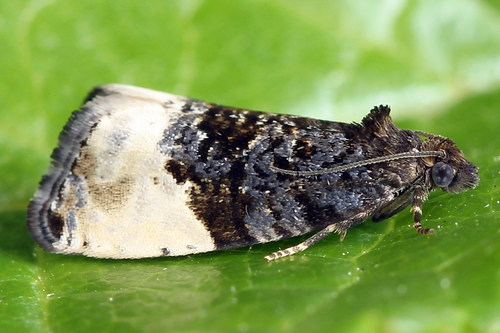
Hedya pruniana, commonly known as the plum tortrix, is a moth species belonging to the family Tortricidae. It is native to the Palearctic realm. It is a common species in central Europe, and its range extends eastward through Anatolia, Iran, the Ural, Transcaucasia, and western Kazakhstan to the Far East. This moth has a wingspan of 15 to 19 mm. Its forewings are white, sometimes with a partial ochreous tinge, and are more or less marked with dark fuscous short streaks towards the posterior. The basal patch, central fascia, and the space between them are dark brown mixed with dark ashy-fuscous and blackish coloring, with some whitish sprinkling, most prominent on the costa and fold within the space. The posterior edge of the fascia has an angular projection in its center, which is sometimes followed by one or two dark dots. There is a greyish subterminal streak on the forewings, and the very apex is blackish-fuscous. The hindwings are grey, and are darker in females than in males. The larva is bright green, with black tubercles, a black head, and a black second segment plate. Adult moths are active between May and August. The larvae feed on a variety of plants, including Prunus spinosa, Crataegus, Rosa, Sorbus, and Corylus avellana. Larvae can be found from July or August to April or May, and the species overwinters in the larval stage.