About Hebeloma sinapizans (Paulet) Gillet
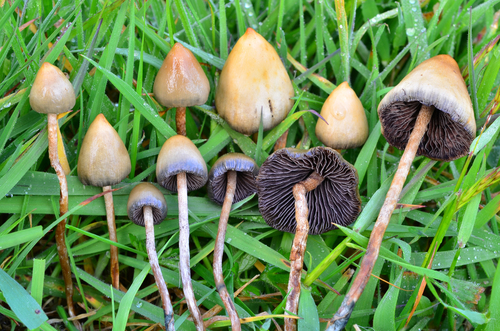
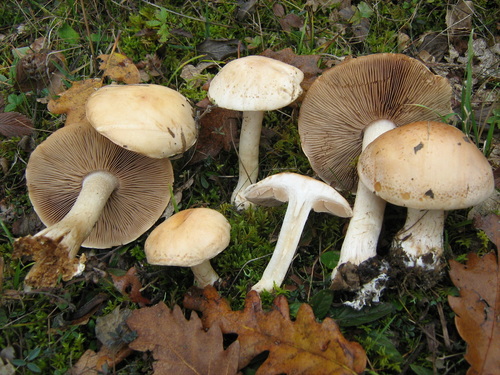
The fruit body of Hebeloma sinapizans has a cap that starts convex and flattens as it ages, reaching 4–16 centimetres (1+1⁄2–6+1⁄2 inches) in diameter. The cap may have a shallow umbo. Its surface is smooth, moist to sticky, with an initially inrolled margin that becomes uplifted over time. The cap is tannish, and sometimes has pinkish or grayish tints. The gills attach adnately to the stipe, with a notch just before the attachment point; their edges have tiny fringes or serrations. Gills start whitish and turn pale brown when mature, and the spore print of this species is pale brown. The stipe is 2–13 cm (1–5 in) long and 1–3 cm thick, roughly equal in width apart from a swollen base. The flesh is whitish and thick, with an odor and taste similar to radish. The spores are elliptical with a rough surface, and measure 10–14 by 6–8 μm. As of December 2022, this species has been found in 20 European countries, as well as in Asiatic Turkey and Lebanon. It fruits on the ground, growing in groups or fairy rings in both deciduous and coniferous forests. Hebeloma sinapizans is poisonous, and causes gastrointestinal upset.