About Hebeloma crustuliniforme (Bull.) Quél.
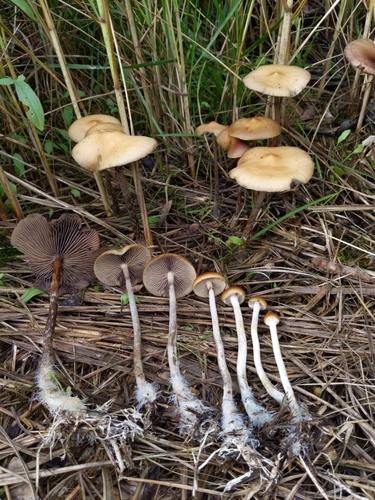
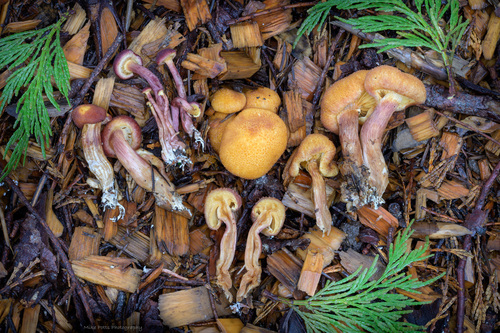
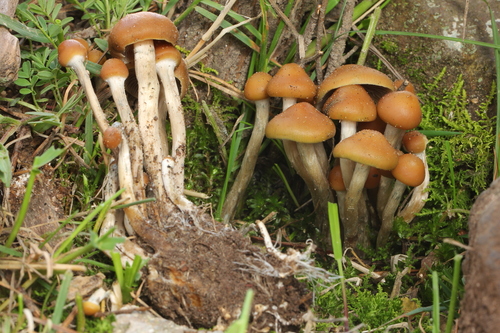
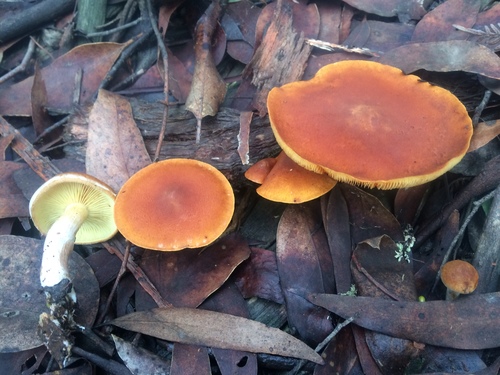
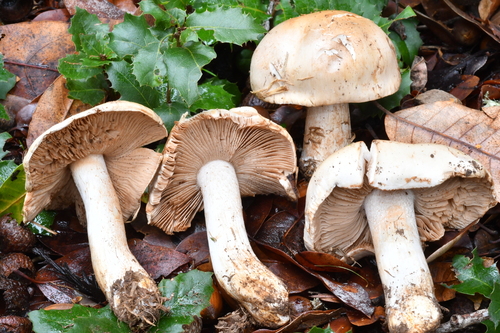
This species, Hebeloma crustuliniforme (Bull.) Quél., has a buff to beige cap that ranges from 3 to 11 centimetres (1+1⁄4 to 4+1⁄4 inches) in diameter. The cap starts convex, becomes umbonate, and develops an uplifted margin as it ages. Its gills are crowded, adnate or notched; they are pale when young, turn brown as the mushroom ages, and form beaded droplets when conditions are moist. The stipe measures 4 to 13 cm long and 0.5 to 1.5 cm (1⁄4 to 1⁄2 in) thick, has a wider base, and lacks a ring. The thick flesh is white, has a radish-like smell, and tastes bitter. The spores are brown, elliptical, and slightly rough. The species has been recorded in 18 countries, including most of Europe, both coasts of North America, and occurs less frequently in Victoria, Australia. It is a common mushroom that grows in open woodland and heathland during summer and autumn, and can also be found in winter in milder climates such as California. According to David Arora, it is "by far" the most common Hebeloma species found in California. This fungus is poisonous, and consumption causes mild to severe gastrointestinal upset, including vomiting, diarrhea, and colicky abdominal pain that begins several hours after eating.