About Harpullia pendula Planch. ex F.Muell.
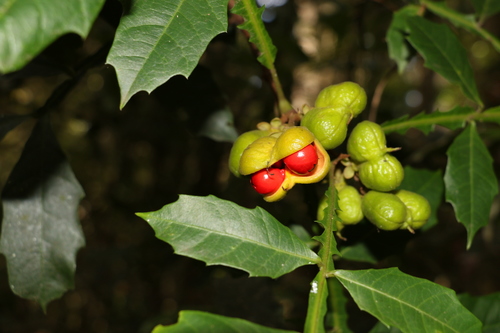
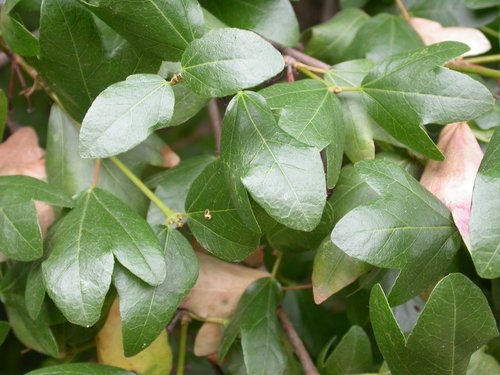
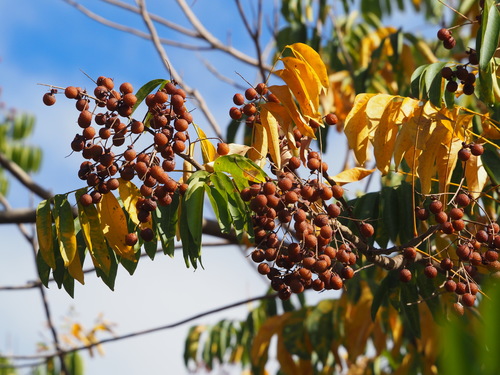
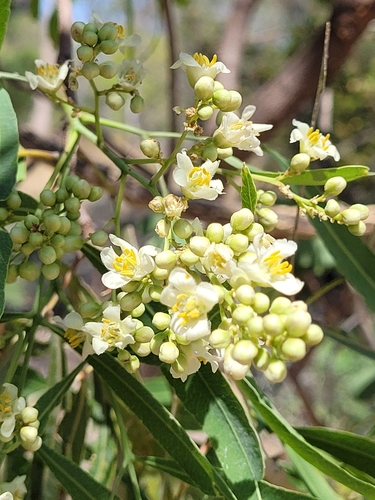
Harpullia pendula Planch. ex F.Muell. is a tree that typically reaches a maximum height of 15 m (49 ft), with a diameter at breast height up to 60 cm (24 in). Its new growth is covered in soft, fawn-coloured hairs. The leaves are paripinnate, measuring 100–300 mm (3.9–11.8 in) long, and bear 4 to 8 leaflets. Each leaflet is elliptic to egg-shaped, thin but leathery, with the narrower end positioned toward the base; most leaflets are 55–105 mm (2.2–4.1 in) long, 20–40 mm (0.79–1.57 in) wide, and attached to a 3–6 mm (0.12–0.24 in) long petiolule. Flowers are arranged in panicles that grow from leaf axils, and the panicles can reach up to 280 mm (11 in) long. Each individual flower sits on a 5–10 mm (0.20–0.39 in) long pedicel. The sepals are oblong to roughly round, 4–5 mm (0.16–0.20 in) long, and covered in hairs. Petals are greenish yellow, 7–8 mm (0.28–0.31 in) long, and flowers usually have 8 stamens. The ovary is covered in woolly hairs, and the style is 5–10 mm (0.20–0.39 in) long and twisted. The fruit is a yellow-orange to red capsule, 13–25 mm (0.51–0.98 in) long, with one seed per locule. Common name tulipwood, this tree grows in dry rainforest on basalt between Coen in Queensland and the Bellinger River in north-eastern New South Wales, at altitudes up to 850 m (2,790 ft). Larvae of the butterfly Deudorix epijarbas feed on Harpullia pendula. It is a popular ornamental tree for horticulture, and its seeds germinate easily, taking between two weeks and two months to sprout.