About Harpalus pensylvanicus (DeGeer, 1774)
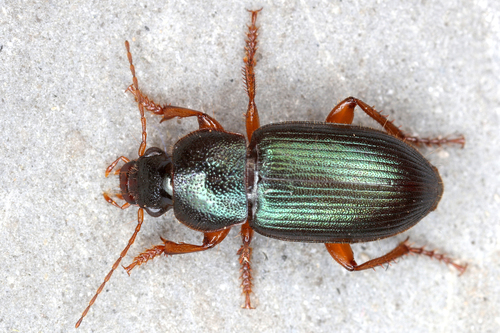
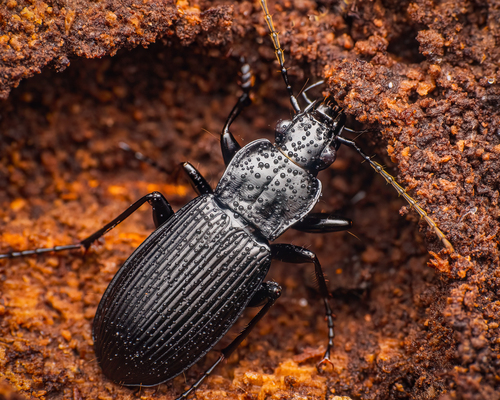
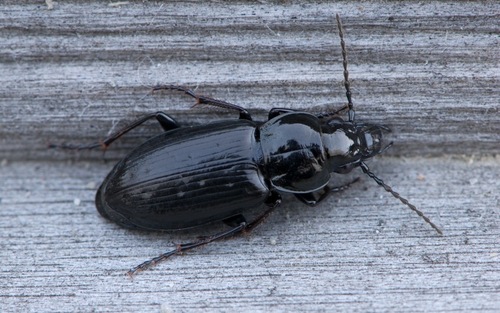
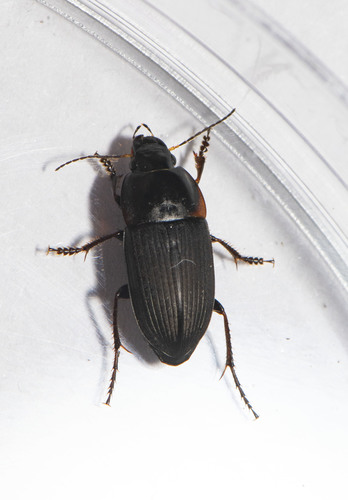
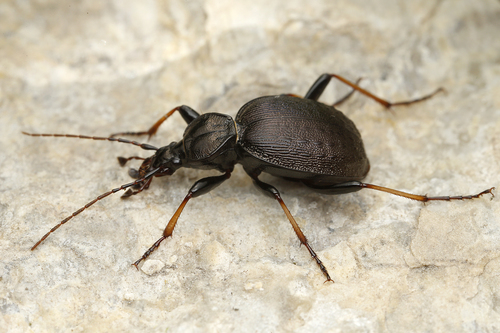
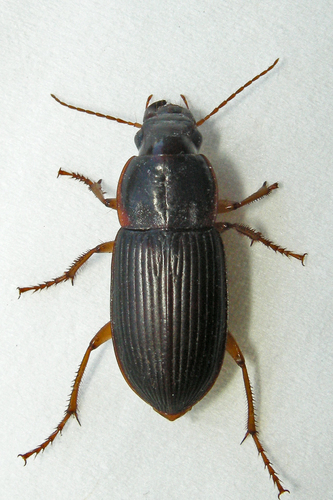
Harpalus pensylvanicus, commonly known as the Pennsylvania ground beetle, is a species of ground beetle belonging to the subfamily Harpalinae. It was first described by DeGeer in 1774, and is found across North America. Adult Harpalus pensylvanicus are shiny black on their upper surface and reddish brown on their underside, with distinct lines along their elytra. The larvae are black overall with a reddish head, have a tapered body shape, and end in two long cerci. This beetle species feeds on the seeds of ragweed and a variety of grasses, and is considered an important predator of weed seeds. It prefers small seeds, such as those of lamb's quarter and waterhemp. It favors high hayfields over low maize fields. The species occasionally damages ripening strawberries, which is likely how it obtains water, and it is attracted to lights. Harpalus pensylvanicus acts as a significant weed seed predator in agricultural settings. The amount of seeds it consumes is strongly affected by water absorption: the beetle eats a greater mass of water-absorbed seeds than dry seeds. It can locate these seeds by smell, responding to the high release of carbon dioxide and ethylene that happens during the early stages of seed germination. This beetle possesses defensive pygidial glands that hold structures rich in the elastic protein resilin. This structure acts as an adaptation that allows for rapid, efficient release of defensive secretions. The complete mitochondrial genome of Harpalus pensylvanicus has been characterized, which confirms its phylogenetic placement within the Harpalinae subfamily.