About Haploa clymene Brown, 1776
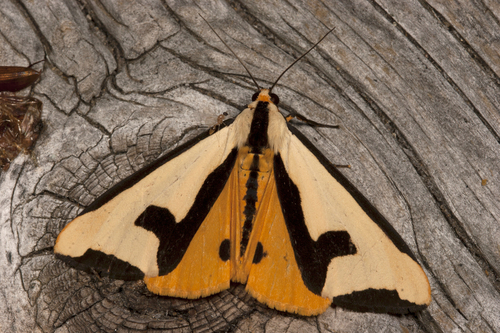
This moth species, Haploa clymene, was first described by Brown in 1776. The forewing is creamy yellow, with a partial brown-black border that extends inward from the inner margin near the anal angle. The hindwing is yellow-orange, marked with one or two brown-black spots. The species has a total wingspan of 40 to 55 millimeters. The spiny larva is brownish-black and features a yellow middorsal stripe. Larvae overwinter as immature individuals, and reach full maturity in spring and early summer. The recorded host plants for larvae are Eupatorium, oak, peach, and willow. The Clymene moth produces one generation of offspring per year.