About Handroanthus chrysanthus (Jacq.) S.O.Grose
Common Name and Growth Soil
Handroanthus chrysanthus, commonly known as araguaney, is a rustic deciduous tree that grows in hard, dry, or poor soils. Even so, its roots need well-drained terrain.
Mature Height
It reaches a height between 6 and 12 meters.
Leaf Characteristics
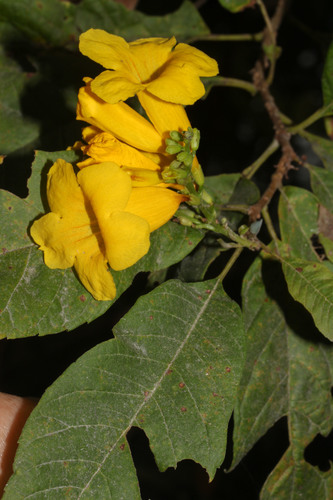
Its leaves are opposite and petiolate, with an elliptic and lanceolate shape, and pinnate venation.
Flower Structure
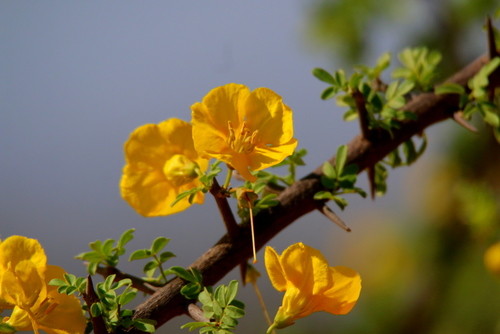
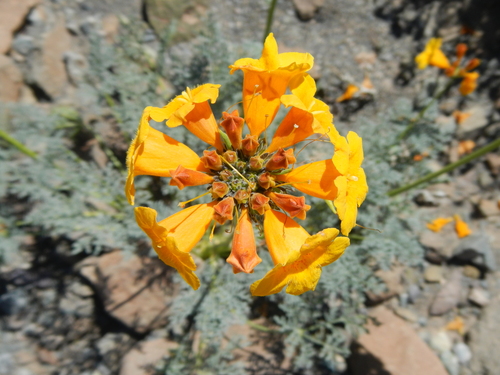
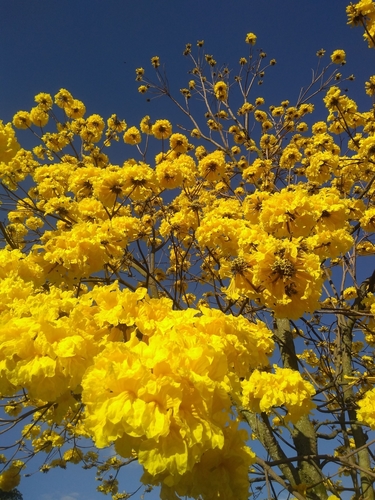
The tree produces large, tubular flowers with a broadened deep yellow corolla, each about 2 inches long.
Flowering Period
Flowering occurs from February to April, before new leaves grow back.
Fruit Characteristics
The fruit is a dehiscent capsule that typically matures by the end of the dry season.
Growth Rate and Lifespan
Handroanthus chrysanthus is slow-growing but long-lived.
Dry Season Reproduction
Both flowering and fruiting happen during the dry season from February to April, allowing seeds to take advantage of early rains. If the rainy season is delayed, the araguaney may produce a mild second round of flowering and fruiting.
Moisture Requirements
It is a highly efficient moisture manager, and similar to mango trees, it requires the most water during the dry season.
Regional Distribution
This species occurs in clearings of deciduous tropical forests across the broad Guiana Shield region. It is also native to warm lowlands, savannas including areas along Vía Oriente to El Guapo, Cupira, and Uchire Sabana, and even some arid hills such as Mampote, Guarenas, Guatire, and Caucagua.
Habitat Elevation Range
Its habitat ranges from 400 to 1700 meters above sea level.