About Halpe porus (Mabille, 1876)
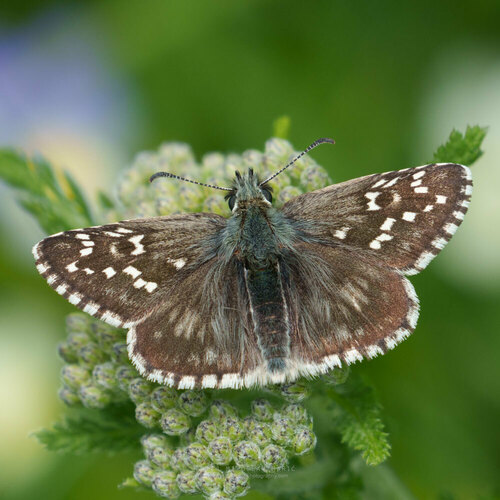
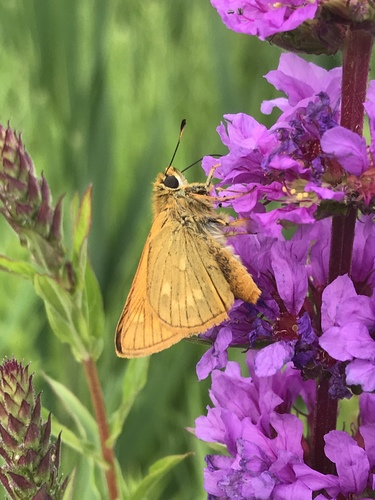
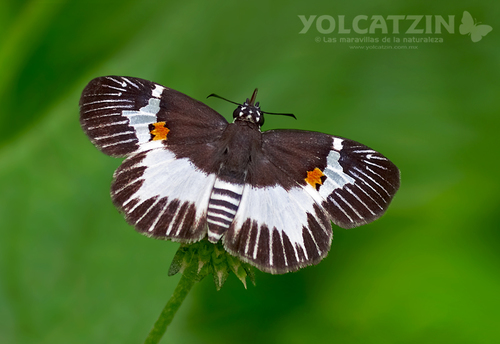
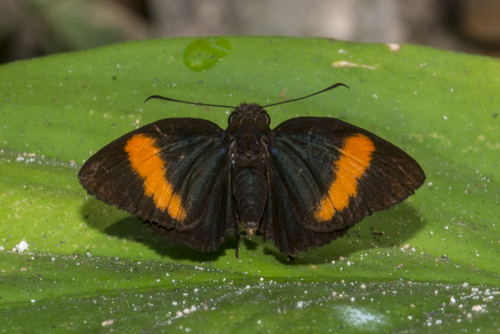
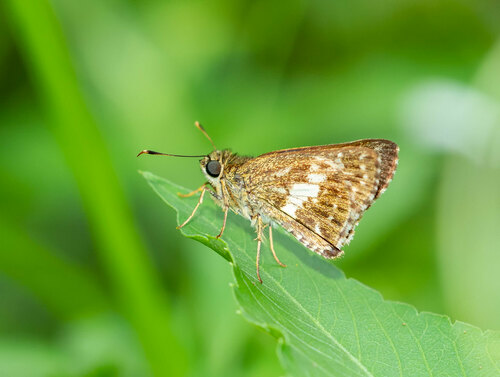
This species is Halpe porus, originally described by Mabille in 1876. The description below covers adult males and females, as well as the known larval host plants. In males, the upper wing surface is blackish-brown. The forewing has seven semi-translucent spots: two within the cell towards its end, positioned one above the other; one slightly larger spot close to the base of the first median interspace; a similar sized spot positioned obliquely above this first spot, near the base of the second median interspace; and three small sub-apical spots arranged in an outwardly oblique curve. The hindwing has only a small, slightly diffused, faintly yellow-tinted area in its upper middle, with no other markings. The cilia of the forewing are chequered brown and greyish-white; the cilia of the hindwing are greyish-white, with a few brown marks. The underside of the wings has a slightly paler ground colour. Forewing spots match those on the upperside, with the addition of a series of small white sub-marginal spots in the interspaces. This series is usually complete, but one or two spots may be underdeveloped (obsolescent) in some individuals. The hindwing has a conspicuous outwardly curved discal white band, split by veins into six elongated spots. The band starts near the costa before the apex, increases in size towards the hind margin, is largest in the middle section, and extends to near the submedian vein. There is a small whitish spot at the end of the cell, which is sometimes absent, plus an incomplete series of sub-marginal whitish spots. The two spots closest to the anal angle are larger than the other, minute spots, and the wing is sparsely covered with tiny yellowish scales. Antennae are black; the shaft has fine minute white spots on the underside, and the club is pale orange-yellow on the underside and at the tip. Palpi, head, and body are blackish-brown; palpi and the pectoral area beneath have white and grey hairs, and the abdomen is whitish on the underside. Females are similar to males, but have an extra white spot on the forewing at the middle of the sub-median vein. All spots are larger than in males, and the pale area in the middle of the hindwing is somewhat paler than in males. The larvae feed on Bambusa striata and Ochlandra scriptoria.