About Haloxylon ammodendron (C.A.Mey.) Bunge ex Fenzl
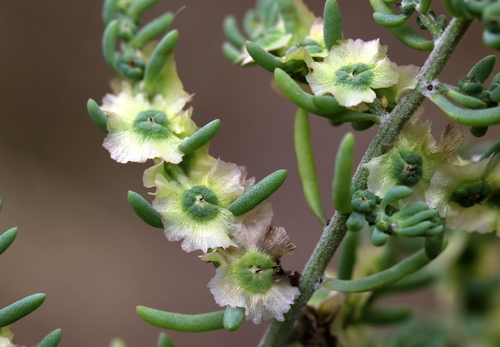
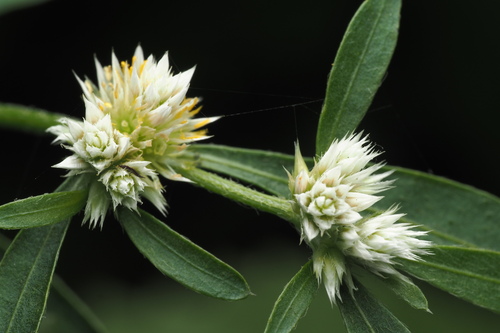
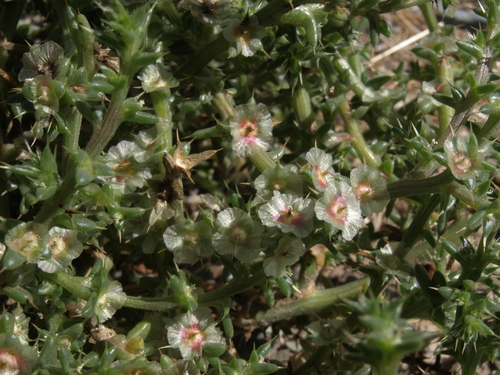
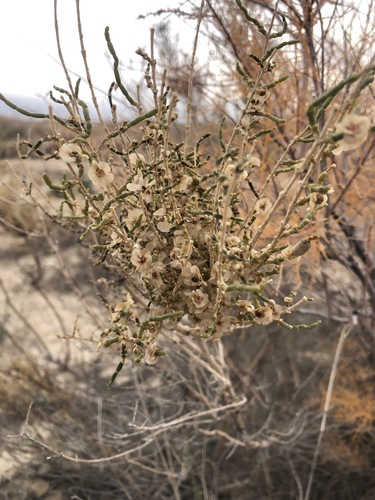
Haloxylon ammodendron, commonly called saxaul or black saxaul, ranges in size from a large shrub to a small tree, growing 2–8 metres (6+1⁄2–26 feet) tall, and rarely reaching 12 m (39 ft). It has a brown trunk up to 25 centimetres (10 inches) in diameter. Its wood is heavy and coarse, while its bark is spongy and water-filled. New growth branches are green; older branches are brown, or gray to white. Its leaves are reduced to tiny, cusp-shaped scales, giving the plant an almost leafless appearance. Its inflorescences are made up of short lateral shoots that grow on stems from the previous year. Flowers are either bisexual or male, very small, and as long as or shorter than the bracteoles. The flowering period occurs from March to April. When the plant fruits, the perianth segments develop spreading pale brown or white wings. The winged fruit has a diameter of about 8 millimetres (3⁄8 in), and the seed measures 1.5 mm (1⁄16 in) across. The fruiting period runs from October to November.
Saxaul is distributed in the lowlands of Central Asia, including southern Kazakhstan, Turkmenistan, western Uzbekistan, Iran, western Afghanistan, Mongolia, and China (specifically Xinjiang and Gansu). It also grows occasionally in western Kyrgyzstan and Tajikistan. It is a psammophyte that grows in sandy deserts, on sand dunes, and in steppe environments up to 1,600 m (5,200 ft) above sea level. In Central Asia, it often forms extensive 'saxaul forests', while in Iran it typically grows in scattered stands.
In Kazakhstan, Turkmenistan, and Uzbekistan, locusts of the genus Dericorys and Turcmenigena varentzovi (the saxaul longhorn beetle, also called Varentsov's longhorn beetle, of the tribe Hesperophanini) are pests that attack black saxaul. Dark cone-shaped galls are often found on saxaul plants. The parasitic plant Cistanche deserticola, which grows on saxaul roots, is valued in traditional Chinese medicine as the 'ginseng of the desert'.
Saxaul is planted on a large scale for afforestation of arid areas in China. As a highly drought-resistant species, it has played an important role in establishing shelter belts and fixing sand dunes to combat desertification. The thick bark of the saxaul stores water; quantities of bark may be pressed to obtain drinking water, making saxaul an important water source in arid regions where it grows. Saxaul is a traditional firewood in Turkmenistan. It was heavily harvested in some Turkmen provinces for fuel during the 2008 Central Asia energy crisis. In the Gobi desert, saxaul is often the only tree species found; historically and in some areas still today, it is the only source of wood available to nomads for heating and cooking. When the Russian Imperial Navy launched the first steamships on the landlocked Aral Sea, local Governor-General Vasily Perovsky ordered the commander of Fort Aralsk to collect as large a supply of saxaul wood as possible, for the new steamships' 1851 maiden voyage. Unfortunately for the Russian Naval budget (and likely fortunately for saxaul populations), saxaul wood turned out to be poorly suited for steamship use: the hard, resinous wood was difficult to cut, and its knotty, crooked logs could not be stored efficiently in the ships' holds. For this reason, starting in 1852, the Aral Flotilla switched to coal as its main fuel, despite the high cost of shipping coal by caravan from Orenburg. The Uzbek government has also planted saxaul trees in the Aral Desert to help stop the spread of toxic salts left behind after the Aral Sea dried up, which have caused many health problems for people living around the desert perimeter.