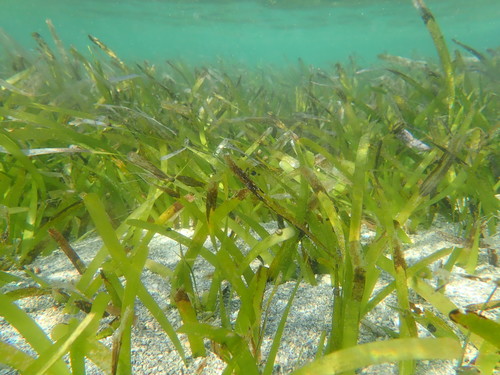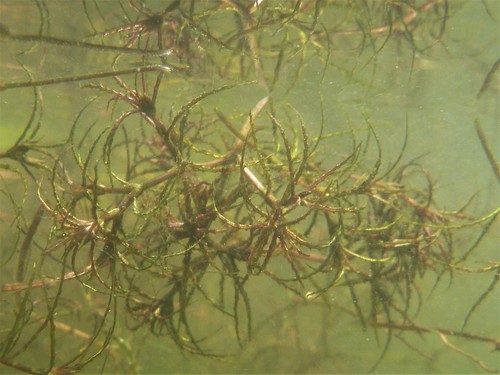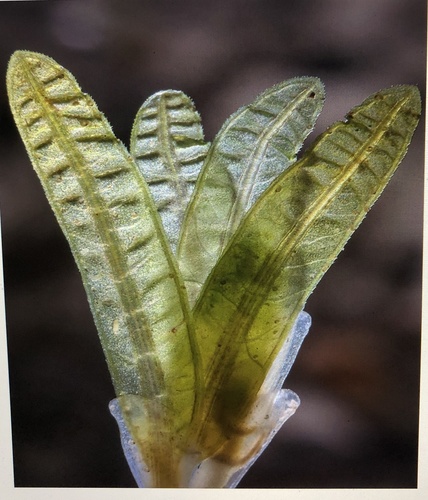
About Halophila stipulacea (Forssk.) Asch.
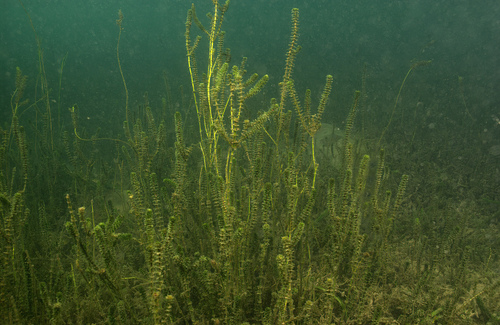
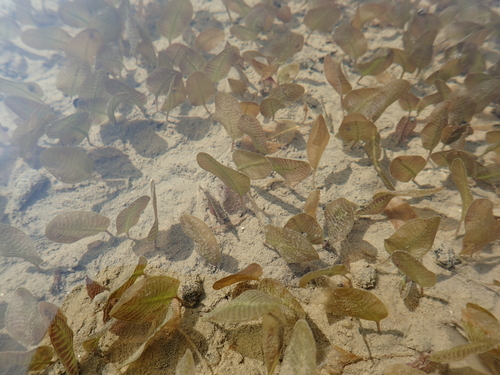
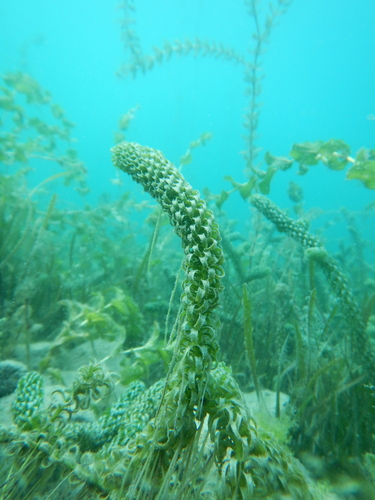
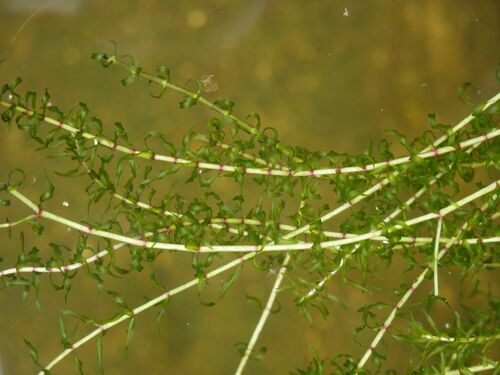
Halophila stipulacea is a seagrass species belonging to the Hydrocharitaceae family. It is native to the Indian Ocean, and has spread into the Mediterranean following the opening of the Suez Canal. This seagrass is widespread across the Gulf of Aqaba. More recently, it has reached the Caribbean, where it is currently spreading. Researchers suggest that the expansion of H. stipulacea from the Red Sea into the Mediterranean Sea occurred as a result of the opening of the Suez Canal in 1869. Its invasion into the Mediterranean was first officially documented in 1894. This species was first reported in the Caribbean in Grenada in 2002, Dominica in 2007, and St. Lucia in 2008. By 2017, H. stipulacea had expanded to nineteen additional Caribbean islands. In the United States Virgin Islands, H. stipulacea was first observed in 2012 along the northeast coast of St. John, then later on St. Thomas in 2013 and St. Croix in 2016. H. stipulacea has also been observed for the first time on the Venezuelan coast at Playa Mansa, near Naiguatá in Vargas state. H. stipulacea is classified as an invasive species due to its ability to displace native seagrass species. It achieves this by forming thick mats, adapting to changes in environmental conditions, and growing across an extreme depth gradient.