About Halocnemum strobilaceum (Pall.) M.Bieb.
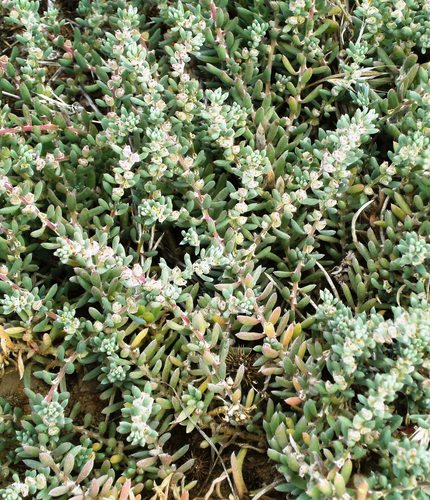
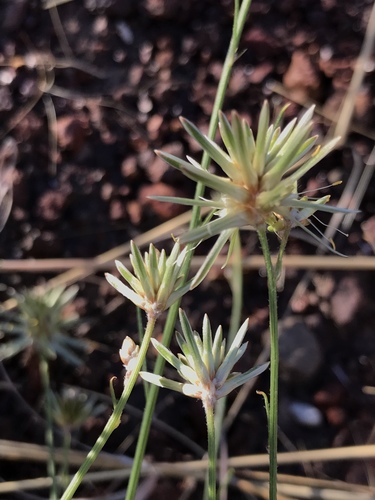
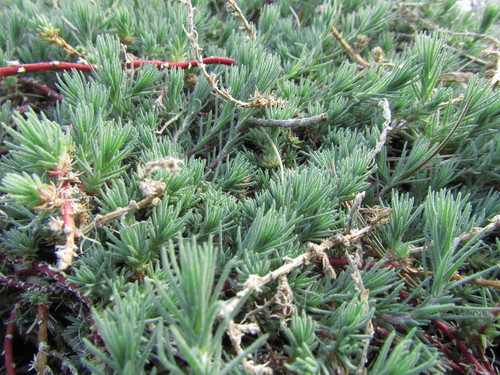
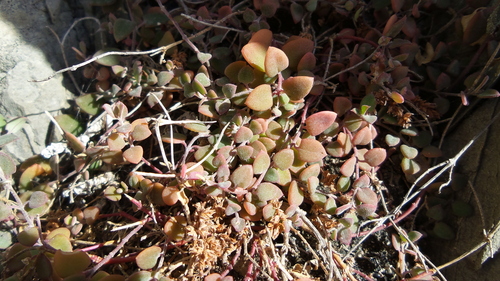
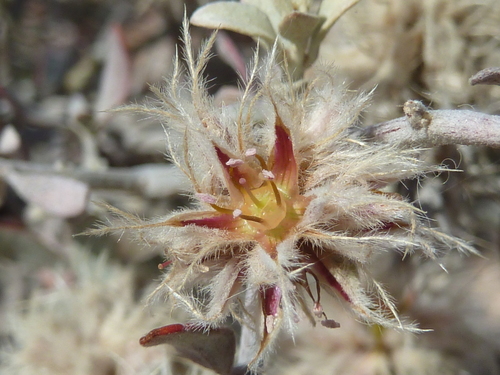
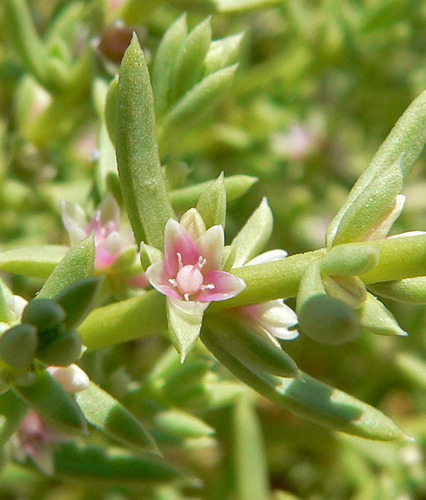
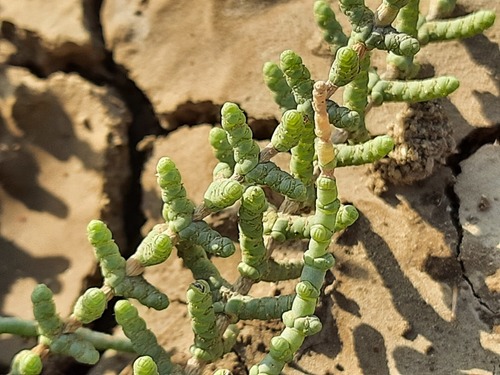
Halocnemum strobilaceum (Pall.) M.Bieb. is a much-branched, semi-prostrate sub-shrub, with erect branches that reach up to around one metre in height. The woody basal stems are jointed, with sterile rounded or conical buds arranged in whorls on the terminal end of each stem section. The erect stems are cylindrical and succulent, with green joints that turn yellow as they age. Short, bluish-green, scale-like leaves clasp the stem at each node. Its flowers are hermaphrodite, very small, and arranged in groups of three in whorls on the upper parts of branches. This species occurs along coasts bordering the Mediterranean Sea and the Red Sea. It is also found across the Middle East and central Asia, extending east as far as Mongolia and China. In Iran and Pakistan, it grows in muddy coastal swamps located just inland from the Avicennia marina mangroves that line the Persian Gulf coast. In the Mediterranean delta region of Egypt's coast, it is the dominant species in some salt marsh plant communities. In Abu Dhabi, it grows in muddy-bottomed lagoons alongside Arthrocnemum macrostachyum, and also along storm-formed ridges of shelly sand higher up on the beach. When gelatinous cyanobacteria crusts form in ground depressions and become covered in wind-blown sand, Halocnemum strobilaceum also colonizes these habitats. Along the sandy Tunisian coast, it forms hummocks and grows alongside Bassia muricata, Cutandia memphitica and Traganum nudatum. In the northwestern Chinese provinces of Xinjiang and Gansu, it is one of the dominant plants growing on saline plains, salt lake shores, and alluvial fan edges. Along with glasswort and Arthrocnemum macrostachyum, Halocnemum strobilaceum was one of the first plant species to recolonize oil-polluted marshland in the Persian Gulf after crabs churned and aerated the soil.