About Halictus ligatus Say, 1837
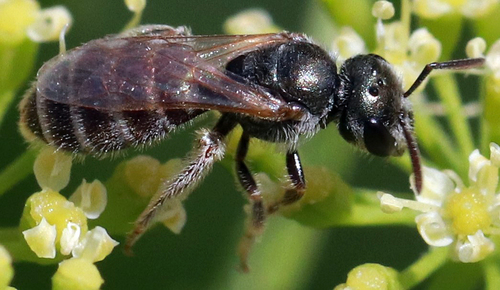
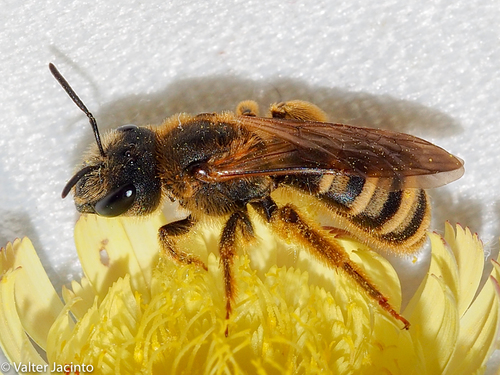
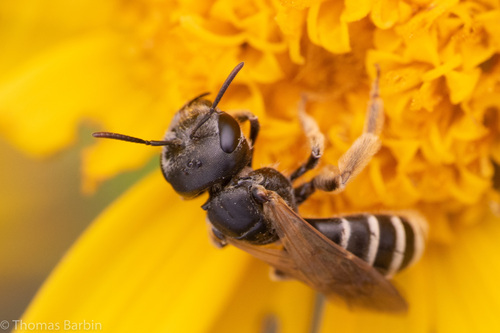
Description and identification: Individuals of Halictus ligatus look very similar to other members of the genus Halictus. They can be easily told apart from bees of the closely related genus Lasioglossum by the presence of pale fasciae hair bands on the posterior margins of their metasomal terga. This species is predominantly black or brown-black, and lacks the faint metallic coloration seen in bees of the Seladonia subgenus. In general, Halictus species are larger than Seladonia species, which are typically under 7 mm long. Female H. ligatus can be easily distinguished from females of other related species by a postero-ventral genal tooth. Males of this species can be easily distinguished from other related males by the presence of long suberect hairs on the second and third metasomal sterna.
Distribution and habitat: Halictus ligatus is one of the most abundant and easily identifiable bees in North America, and occupies a wide range of aridities and altitudes. Its range extends across North America from around 50 degrees north latitude, south to the West Indies and Colombia. It is also found across temperate regions from the Atlantic to the Pacific, including the southern Gulf of Mexico and southern Canada. This broad distribution leads to local differences in behavior, colony cycle, and colony demography, driven by variation in environmental pressures.
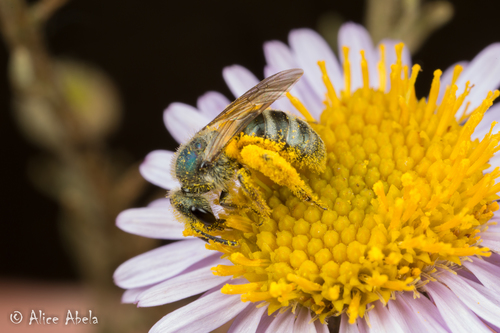
Pollination: H. ligatus is a generalist pollinator; its foraging workers pollinate a wide variety of different plants. Most of the pollen the bees collect is used as food provisions for the nest, but many plant stigmas become pollinated while foragers collect the resources they need.