All Species Plantae

Halerpestes cymbalaria (Pursh) Greene is a plant in the Ranunculaceae family, order Ranunculales, kingdom Plantae. Not known to be toxic.

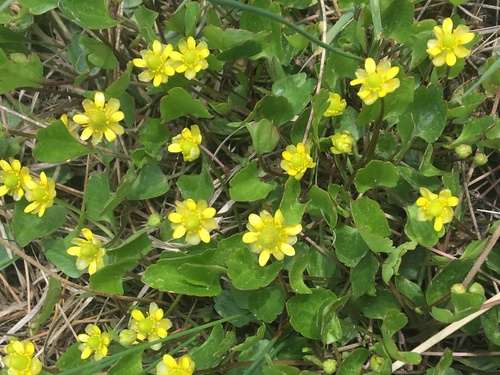
Photo of Halerpestes cymbalaria (Pursh) Greene (Halerpestes cymbalaria (Pursh) Greene)
Plantae

Halerpestes cymbalaria (Pursh) Greene

Halerpestes cymbalaria (Pursh) Greene

Halerpestes cymbalaria, alkali or seaside buttercup, is a perennial buttercup native to Eurasia and parts of the Americas that grows in moist habitats.

Identify with AI — Offline
Family
Genus
Halerpestes
Order
Ranunculales
Class
Magnoliopsida
⚠️ Toxicity Note

Insufficient toxicity evidence; avoid direct contact and ingestion.

About Halerpestes cymbalaria (Pursh) Greene

Nomenclature

Halerpestes cymbalaria is a species of buttercup commonly known by the common names alkali buttercup and seaside buttercup.

Distribution and Habitat

It is native to much of Eurasia and parts of North and South America, growing in many types of habitat, especially moist to wet areas such as marshes, bogs, and moist spring meadows.

Growth Form and Stem Characteristics

It is a perennial herb that produces several stems ranging from a few centimeters to nearly 40 centimeters long. Some stems lie prostrate against the ground, forming stolons that root in moist substrate, while other stems are erect.

Leaf Morphology

Its leaves have variable shapes: basal leaves have notched or slightly divided leaf blades borne on long petioles, and any upper leaves are much reduced in size.

Inflorescence Structure

The inflorescence bears one or more flowers on erect stalks.

Flower Features

Each flower has five to eight pale yellow petals, each less than one centimeter long.

Fruit Characteristics

The protruding receptacle at the center of the flower develops into a cylindrical cluster of fruits, each of which is an achene.
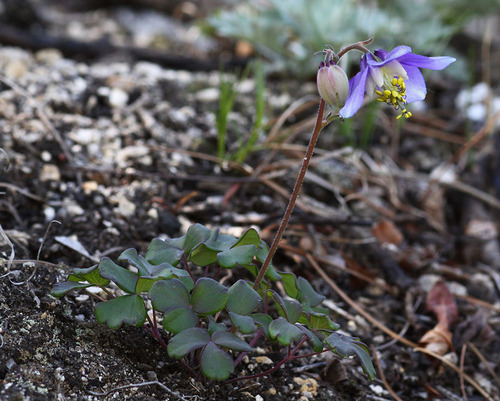
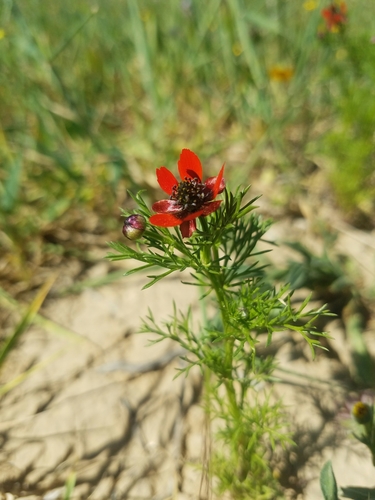
Photo: (c) Ryan Sealy, some rights reserved (CC BY-NC), uploaded by Ryan Sealy · cc-by-nc

Taxonomy

Plantae Tracheophyta Magnoliopsida Ranunculales Ranunculaceae Halerpestes

More from Ranunculaceae

Sources: GBIF, iNaturalist, Wikipedia, NCBI Taxonomy · Disclaimer

Start Exploring Nature Today

Download iNature for free. 10 identifications on us. No account needed. No credit card required.

App Store
Scan to download from App Store

Scan with iPhone camera

Google Play
Scan to download from Google Play

Scan with Android camera