About Haemorhous purpureus (J.F.Gmelin, 1789)
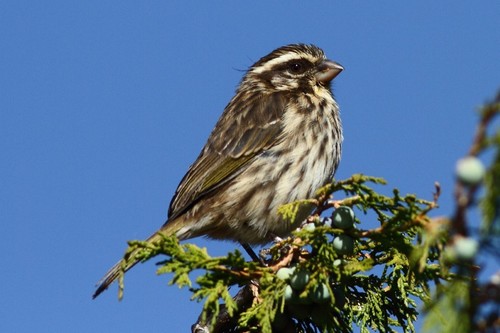
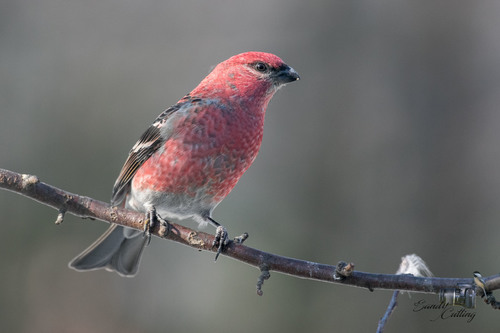
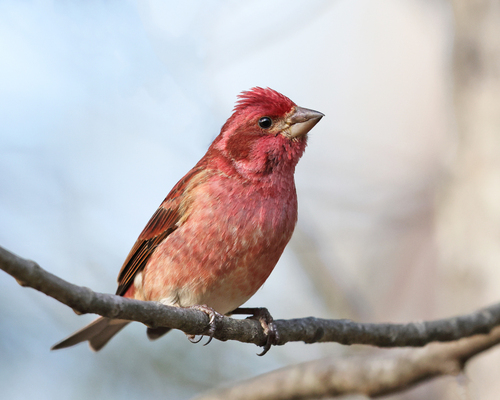
This species, Haemorhous purpureus (J.F.Gmelin, 1789), is commonly called the purple finch. Adults measure 12–16 cm (4.7–6.3 in) in total length, with an average weight of 23.3 g (0.82 oz), and a weight range of 19.8–28.4 g (0.7–1.0 oz). It has a short, forked brown tail and brown wings. Adult males have raspberry red coloring on the head, breast, back and rump, with streaked patterning on the back. Adult females have light brown upperparts, white underparts with dark brown streaks across the body, and a distinct white facial line running above the eye. The subspecies H. p. californicus differs from the nominate subspecies in having a longer tail, shorter wings, a longer bill, and darker overall plumage in both sexes; female H. p. californicus also have more greenish coloration than nominate females. Its breeding habitat consists of coniferous and mixed forest across Canada and the northeastern United States, plus a variety of wooded areas along the U.S. Pacific coast. Purple finches that breed in northern Canada migrate to the southern United States for the non-breeding season, while other populations remain year-round permanent residents. After the introduction of the house finch (a species native to the western U.S. and Mexico), purple finch populations have been displaced from some of their breeding habitats in the Eastern United States. The two species occupy similar ecological niches, and the house finch often outcompetes purple finches during the summer breeding season. Purple finches forage in trees and bushes, and occasionally forage in ground vegetation. Their diet consists mainly of seeds, berries, and insects, and they show a particular fondness for sunflower seeds, millet, and thistle.