About Haematoxylum campechianum L.
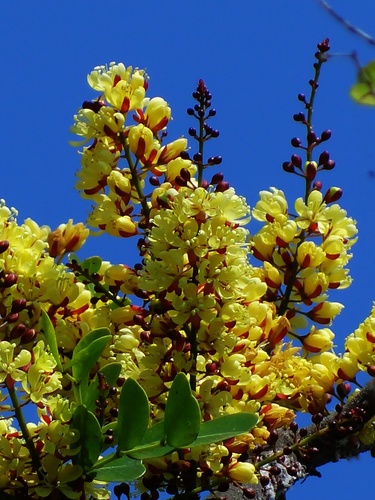
Haematoxylum campechianum L., commonly known by many common names including blackwood, bloodwood tree, bluewood, campeachy tree, campeachy wood, campeche logwood, campeche wood, Jamaica wood, logwood, and logwood tree, is a flowering tree species belonging to the legume family Fabaceae. It is native to southern Mexico, and has been introduced to the Caribbean, northern Central America, and other locations across the globe. From the 17th century through the 19th century, this tree held major economic importance: it was commonly logged and exported to Europe to be used for dyeing fabrics. The modern country of Belize grew out of 17th and 18th century logging camps set up by the English. The species' scientific name translates to "bloodwood", from the Greek words haima (meaning blood) and xylon (meaning wood). Haematoxylum campechianum was used for a long time as a natural source of dye. Its woodchips remain an important source of haematoxylin, which is used for staining in histology. The tree's bark and leaves are also used in various medical applications. Historically, it was regarded as a versatile dye, and was widely used for both textiles and paper. The extract from this tree was once used as a pH indicator: it is brownish when neutral, turns yellow-red under acidic conditions, and turns purple under alkaline conditions. In a small demonstration experiment, if one drop of concentrated ammonia and one drop of logwood extract are placed close enough together, ammonia vapors will change the color of the extract to purple.