About Haemanthus pubescens L.f.
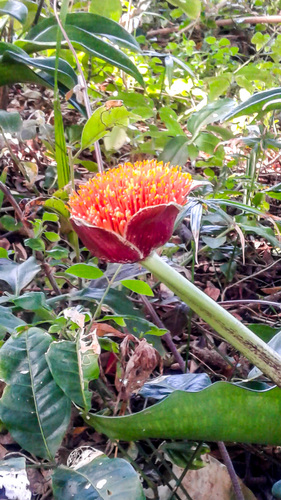
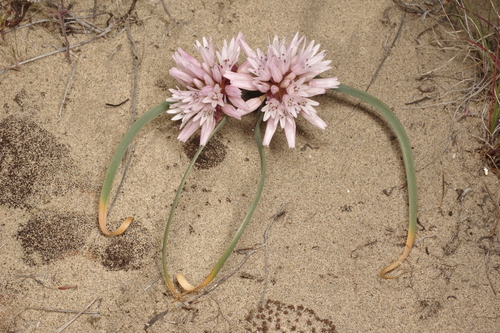
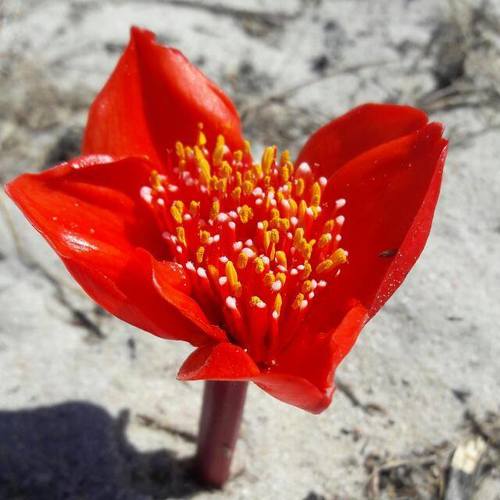
The scientific name Haemanthus pubescens L.f. derives its specific epithet 'pubescens' from Latin, meaning 'having a soft downy covering'. This species is a bulbous geophyte endemic to South Africa, belonging to the genus Haemanthus. It was first formally described by Linnaeus the Younger in 1782, 29 years after his father Carl Linnaeus described the related species H. coccineus. Both species are common along South Africa's West Coast, so it has long been considered puzzling that H. pubescens was not collected and described much earlier. The genus Haemanthus was originally established by Carl Linnaeus in 1753. In 1838, Constantine Samuel Rafinesque reclassified several Haemanthus species into separate new genera, placing H. pubescens in the new genus Leucodesmis, H. coccineus in Perihema, and H. carneus in Serena. English botanist Richard Anthony Salisbury (1761-1829), in his posthumous 1866 publication 'Genera of Plants', reclassified additional Haemanthus species, placing H. amarylloides under the genus Melicho and H. albiflos under Diacles. H. pubescens grows at elevations up to 300 m, distributed from Cape Town northward along the coast to southern Namibia. It was originally known only from the south-western Cape, but new collections from areas north of the Olifants River extending into Namibia led to a revision of the species' accepted geographic range. This species can be identified by its diagnostic 4 to 7 large, fleshy spathe valves. It produces two broad leaves that lie flat on the ground and are usually covered in soft downy pubescence. Its bulbs grow deep in the ground and have fleshy, distichously arranged tunics.