About Hadena bicruris Hufnagel, 1766
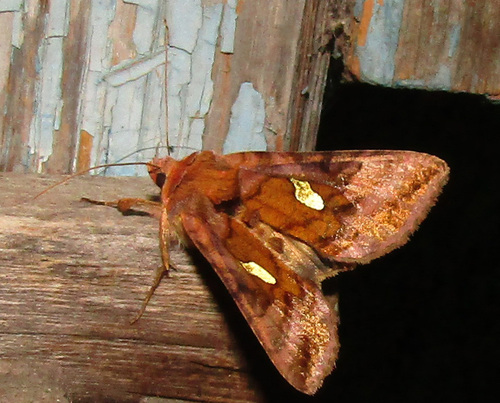
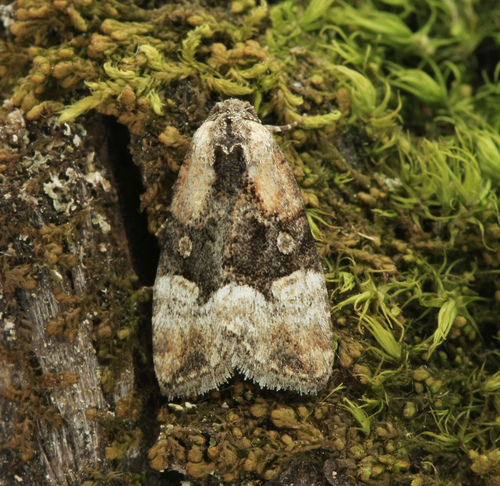
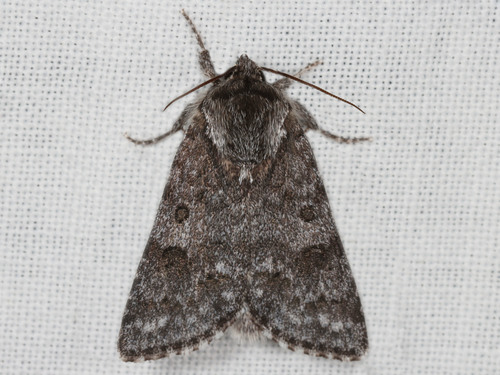
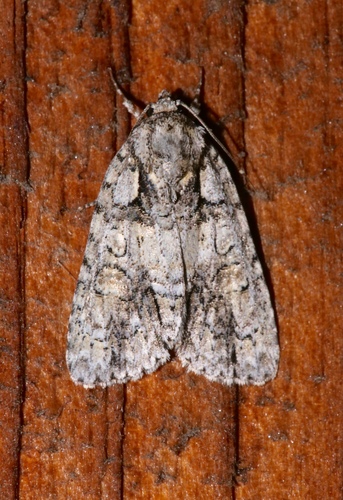
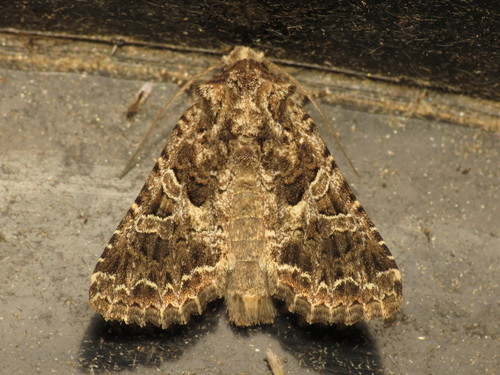
Description: This species has dark brown forewings marked with two prominent white-bordered stigmata and a white subterminal line. The hindwings are buffish, darkening to brown towards the margin, but have a prominent white fringe. Seitz's description notes it can be distinguished from Hadena rivularis (F.) by the absence of a violet sheen, white rather than yellow markings, non-conjoined upper stigmata, a conspicuous black blotch above the inner margin near the base, and fuscous hindwings. The larva is dull brown, with a darker dorsal line and oblique subdorsal streaks.
Pollination: Hadena bicruris is a nocturnal pollinator, meaning it visits flowers late in the day or at night. It engages in a specialised nursery pollination system with Silene latifolia. In nursery pollination systems, female pollinators lay their eggs on flowers, and developing offspring consume the plant, its developing ovules, or its seeds. In this specific system, the host plant and the moth are mutually dependent on each other. This relationship can also be classified as parasitic, because offspring consume seeds, which impacts the plant's seed dispersal. This mutual dependency is weaker than what is seen in many other nursery pollination systems, and co-pollinators can alter the interaction between H. bicruris and S. latifolia.
H. bicruris does not have the specialised pollination structures found in many other pollinators. Instead, pollen granules catch on the moth's body and legs when it visits a flower to feed on nectar. This is called passive pollination, where pollinating organisms have no specialised pollen collecting or depositing behaviour or structures, but still successfully contribute to pollination. When the moth visits a subsequent flower, pollen granules may transfer from its body to the stigma of the new host plant.
Despite lacking specialised pollination structures, H. bicruris is considered the most efficient pollinator of S. latifolia, and both male and female moths contribute equally to pollination. Seed predation (a cost to the plant) only potentially occurs after visits from female moths. Male moths only consume nectar, and cause no damage to any part of the plant. H. bicruris visits both male and female S. latifolia flowers, and shows no preference for either flower sex. Pollinator efficiency is defined by the number of fruits produced after a pollination event. Studies of S. latifolia found that 80% of H. bicruris visits resulted in fruit production, and 45% of ovules were fertilised after a single pollination visit.